Most garments look structured when they are new. The silhouette is clean, the seams appear aligned, and the fabric holds its shape on the hanger or in a fitting room. Nothing looks off at first.
The difference shows up later, after movement, sitting, laundering, and repeated wear. Lapels soften, seams begin to shift slightly, areas under tension start to lose their shape. The garment still looks “fine,” but is no longer as clean or defined. This is when most pieces start to disappoint, even if it’s hard to pinpoint what’s off.
Construction is what determines whether that shift happens quickly, gradually, or barely at all. What matters is not how a garment looks when new; it is how well that garment holds its shape after weeks and months of real use. Let’s dig into how to determine if a garment is constructed in a way that will make it hold up for years to come.
Construction, Explained
Construction is how a garment is put together. Construction goes beyond design and fabric alone. It’s the decisions about the internal structure that determine whether it holds its shape, moves smoothly, and returns to its shape after wear.
It shows up in:
- Whether a blazer keeps its line at the lapel
- Whether trousers stay smooth through the hips and thighs, or develop heavy creasing and subtle pulling or unevenness that disrupts the silhouette after sitting and walking
- Whether a shirt stays aligned on the body, or begins to shift and feel slightly off as the day goes on
Construction comes down to three parts:
- Structure – the internal support that gives shape
- Assembly – how the pieces are joined together
- Stability – how the garment behaves under movement
Two garments can look nearly identical at purchase and perform completely differently over time because of these three variables.
Structure: Inside the Garment
Structure is what allows a garment to hold its intended shape over time.
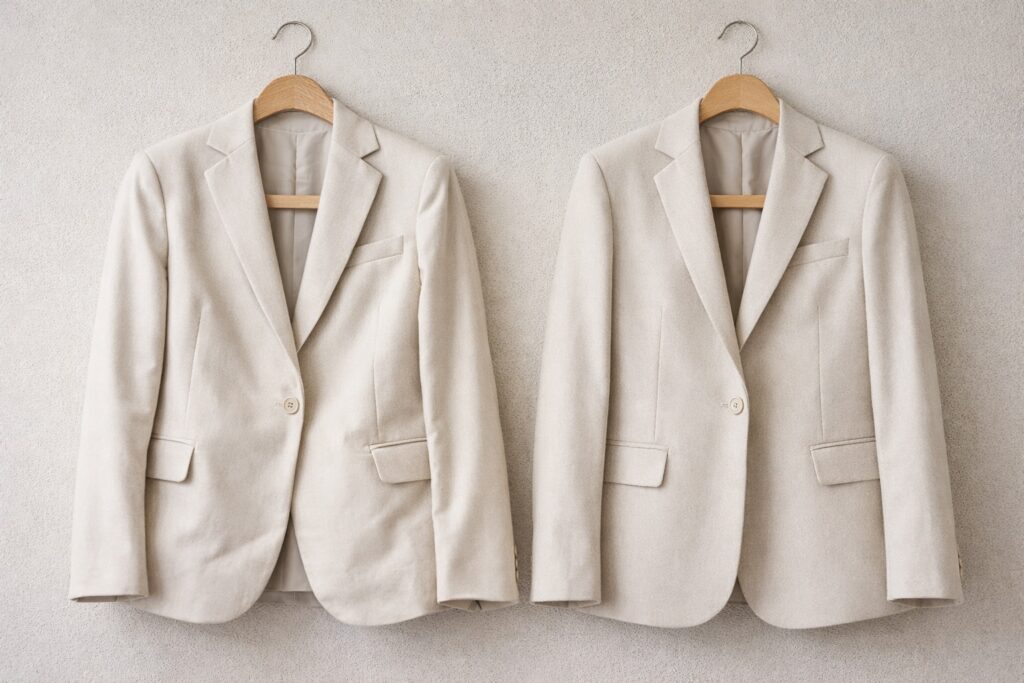
It comes from what’s built inside the garment, not what you see from the outside. In tailored pieces especially, this includes the layers that support the front, the lapel, the collar, and the overall silhouette.
The most important difference is not technical, and it is not about whether something is simply “fused” or “not fused.”
The difference is whether the garment has real support inside, or whether it is relying on the fabric alone.
- Some garments rely primarily on fabric, with little to no internal structure
- Others incorporate internal layers that give the garment shape, stability, and the ability to return to shape after movement
Garments without structure may look acceptable when freshly pressed, but they begin to collapse, shift, or lose their shape as they are worn. Garments with internal support maintain their look, even after hours of movement and instances of wear.
Where You See It First
You see this most clearly in areas that stand out:
- Collars, which should hold a clean, defined shape rather than folding in on themselves
- Lapels, which should lie smoothly and stay flat and smooth
- The front of a garment, which should remain stable rather than rippling
- The waist area, where shaping either holds or disappears
What It Looks Like
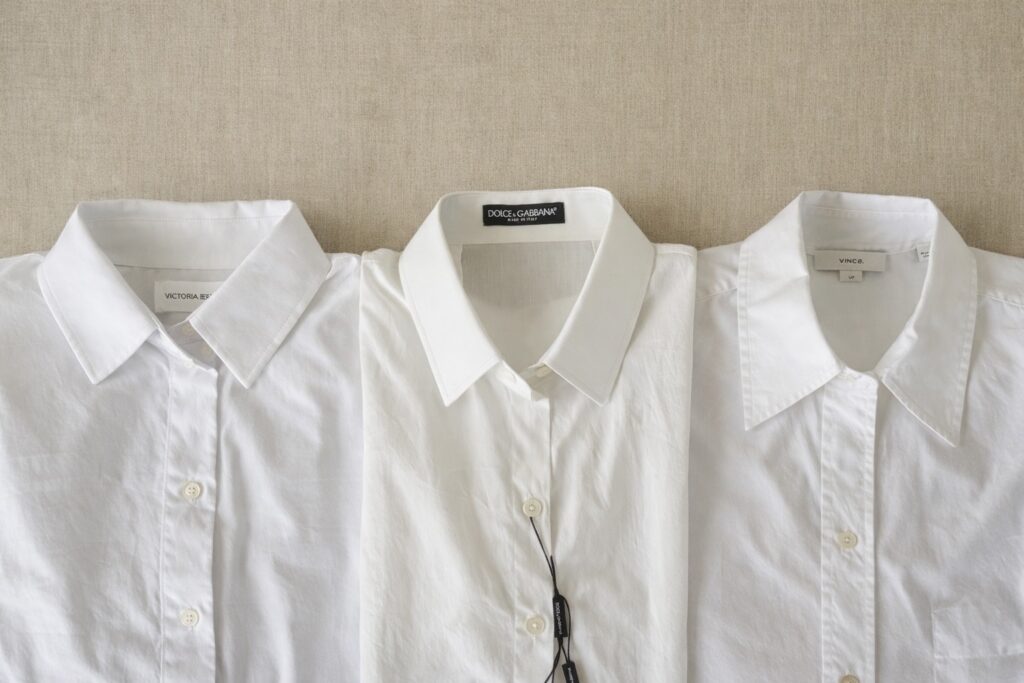
Here, all three shirts are made from similar cotton, but the internal structure is different.
- The shirt on the right has no internal support in the collar. It is simply two layers of fabric. The result is a softer collar that struggles to hold its shape.
- The middle shirt has visible, crisp, structure. The collar holds its form, feels structured, and flatter. You feel the structure in this one immediately when you touch it.
- The shirt on the left has the most balanced result. The collar holds a clean, defined shape, but still has some give without collapsing. When you touch and bend it you can feel that there is structure inside, not just fabric.
This is the difference between a garment that is just fabric with no support (right), and one that has been built with structure inside (left and middle).
Importantly, this is not something you need to identify through technical construction terms. You can see it and feel it directly. Ask these questions:
- Does the collar hold its shape on its own?
- Does it feel like there is substance inside, or just fabric?
- Does it maintain that shape after movement, or only when freshly pressed?
Why It Matters Over Time
The first approach, relying on fabric alone with minimal structure, is common because it is simpler to produce. It can look clean at first, but it doesn’t hold up.
The second approach, using internal structure, allows the garment to move slightly with the body and return to its original form. This is what keeps the garment from looking worn out over time.
The first approach is cheaper and very common. It can look sharp initially but over time those layers separate, ripple, or lose their hold.
Where the Difference Shows
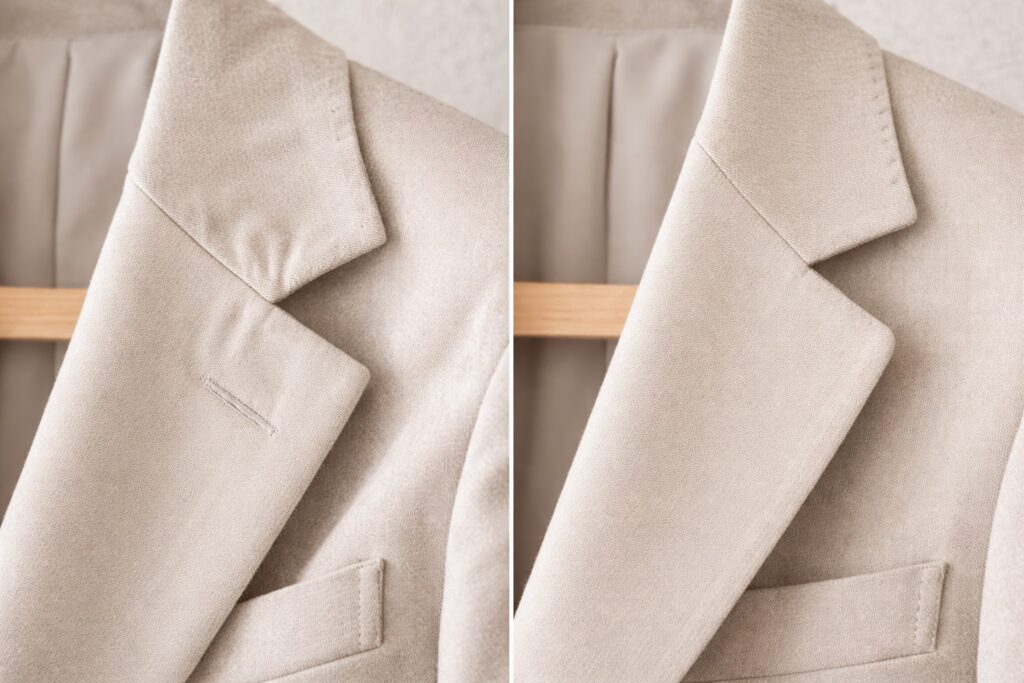
The impact of structure becomes even more visible in tailored garments, where larger surfaces and sharper lines make any loss of shape immediately apparent.
Assembly: How It’s Put Together
If structure is the framework, assembly is the execution.
Many garments begin to lose their shape here, even when the overall design is strong.
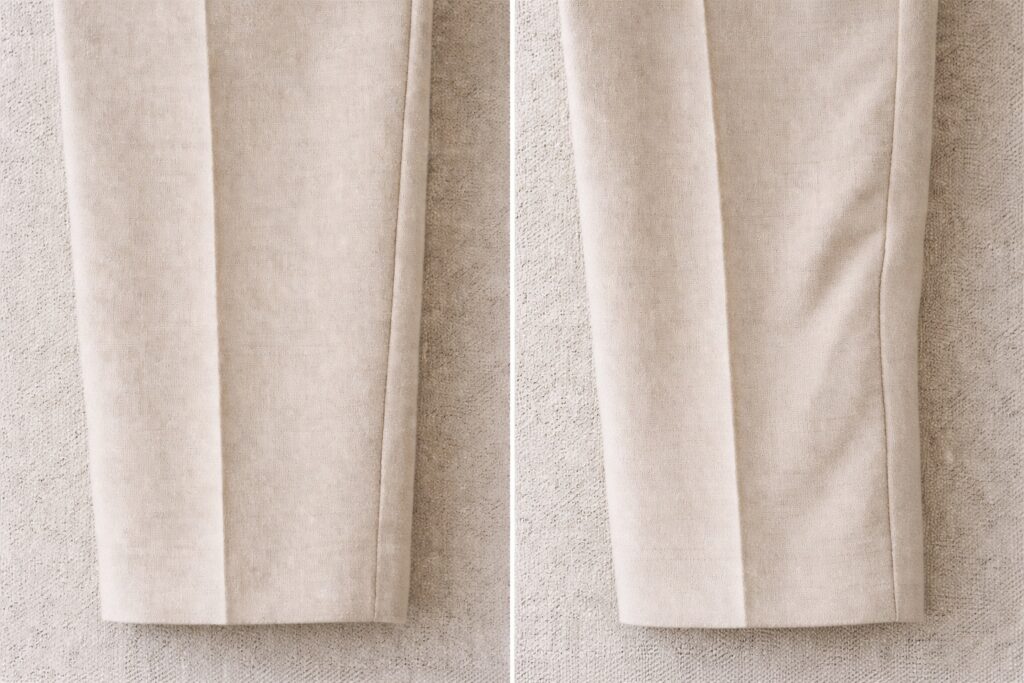
Seams
Seams should lie flat and follow a clean line. When they are poorly executed, you may see:
- Slight twisting along the edge of the trouser
- Rippling along a jacket front
- Bulk that interrupts the garment from draping in a refined way
These are small signals, but they affect how the garment looks overall, whether you consciously register them or not.
Stitching
Stitching should be balanced, not tight and not loose.
- Too loose, and seams weaken over time
- Too tight, and the fabric puckers
You are looking for stitching that disappears into the garment, supporting it without drawing attention.
Alignment
Patterns and seams should meet cleanly. Fabric should lie flat along a seam.
When they don’t it usually comes from rushing or cutting costs in production. Over time, these small misalignments can become more noticeable as the garment moves and wears.
Quality assembly is about maintaining a clean, consistent look, not about perfection for its own sake.
Stability: How it Holds in Motion
A garment is not experienced standing still.
It is worn through movement, sitting, walking, reaching, and repetition. This is where construction becomes obvious.
A well-made piece:
- Moves without pulling or distorting
- Returns to its original shape after tension
- Stays smooth and in place across key areas
A weaker one may:
- Pull through the hip or chest
- Twist slightly after a few hours
- Start to wrinkle unevenly
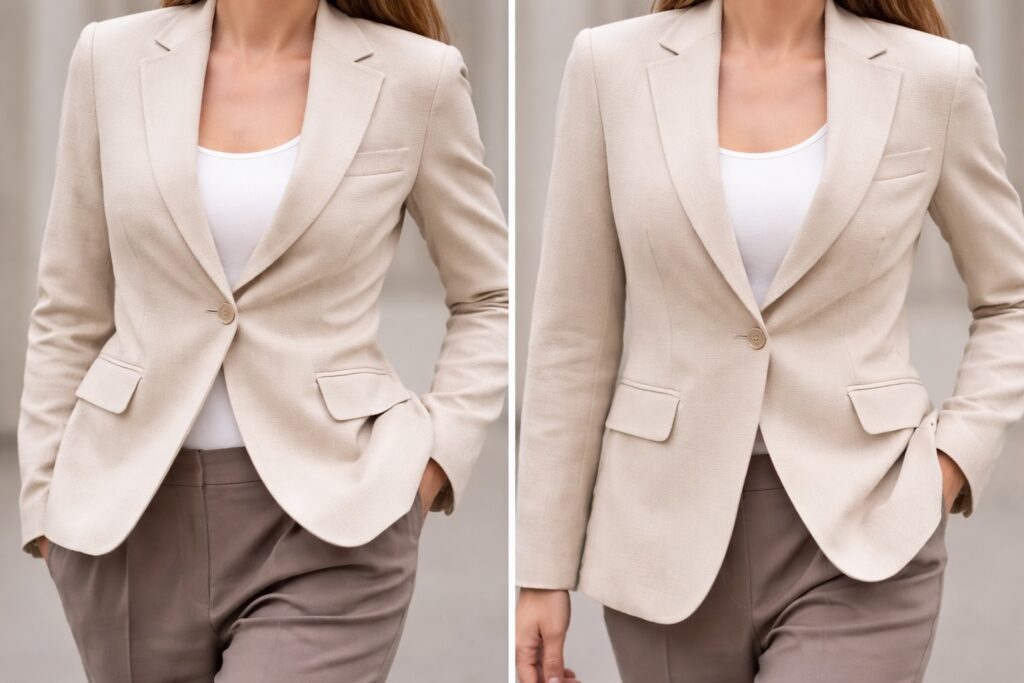
The most important areas to pay attention to are where the body creates stress:
- The hip and upper thigh in trousers
- The elbow in shirts and jackets
- The front of a blazer when buttoned
- The lapel when moving or sitting
Most garments don’t fail immediately; they lose precision slowly, which is why the difference is often overlooked until it’s too late to return them.
Lining and Interior Finish
What’s inside a garment often matters more than what you see on the outside.
A lining isn’t decorative. It allows the garment to move smoothly against the body, helps the fabric fall correctly, and helps the outer layer hold its shape over time.
When it’s done well, the garment moves easily and maintains a clean look throughout the day. When it’s not, the fabric can catch, cling, or collapse, and you see that from the outside.
Interior finishing matters for the same reason.
- Clean, aligned seams let the fabric fall smoothly and reduce bulk
- Rough or uneven interiors can catch during movement, creating pulling or uneven lines
- Excess bulk inside shows up as subtle unevenness in how the garment hangs
You don’t need to analyze how the garment is built in detail. How the garment behaves is the point.
If you turn it inside out, look for a smooth, controlled interior, not one that feels bulky or uneven. More importantly, pay attention to wear: a well made piece moves easily and settles back into place, while a weaker one resists and never quite looks as clean by the end of the day.
How Construction Fails
Most garments do not collapse immediately.
They decline and the shift is gradual.
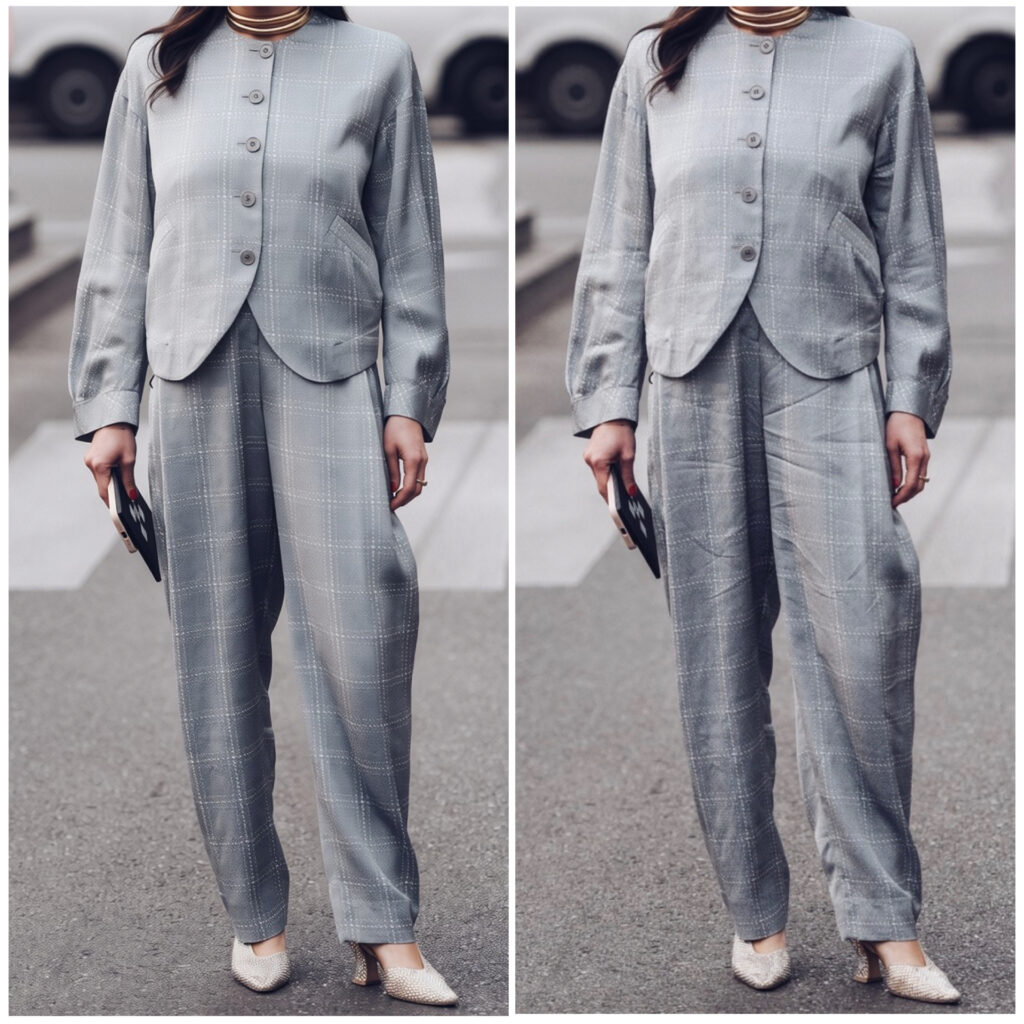
- A lapel that no longer sits quite flat
- A seam that begins to twist slightly
- A front panel that loses its smoothness
- A shape that softens and becomes less defined
Each change seems minor on its own. Together, they change how the garment looks. It moves from looking put together to looking average. With garments in this state many wardrobes begin to feel less effective, even when nothing is visibly “wrong.”
How to Evaluate Construction Quickly
These checks don’t require technical knowledge to judge how it’s made. They will help you feel whether a garment has real structure inside or if it relies on just how it looks at first.
1. Seam Scan
Look along the seams for:
- Puckering
- Twisting
- Uneven stitching
2. Movement Check
If possible, move in the garment.
- Sit, lift your arms, take a few steps
- Does it stay aligned, or begin to pull and shift?
3. Press Test
Lightly press on a structured area, like the front panel of a jacket or chest area.
- Does the fabric maintain its shape?
- Or does it feel unsupported and start to collapse a bit?
4. Pinch Test
On a blazer front, collar, or waistband gently pinch the fabric and feel for what’s underneath
- Is there substance and layering that gives the garment structure?
- Or does it feel thin and unsupported?
How to Evaluate Online
When shopping online:
- Zoom into seams and edges
- Look for pulling or stretching across the fabric in how the garment sits on the model
- Pay attention to lapels and fronts of jackets, pants, and shirts, do they lie cleanly or slightly ripple?
These signals are subtle, but they show up consistently once you know what to look for.
If you have never worn or tried on an investment grade garment go into a store and try some on. Do the tests above. Then try on a lower quality piece. You will see the difference in the way the garment looks and feels and you will have a frame of reference to judge whether it’s worth it.
Common Misconceptions
Several assumptions lead to poor decisions:
- If it looks structured, it is structured. Visual sharpness at purchase does not guarantee long term shape.
- Heavier garments are better constructed. Weight does not ensure internal support.
- Higher price means better construction. Price doesn’t always match how well something is made.
- You can’t tell without expertise. Most of the signals are easy to see once you know where to look.
What to Look for Instead
Focus on indicators of longevity:
- Structure that holds where the garment carries shape: shoulders, collar, lapels, through the hip and thigh
- Seams that are clean and aligned
- A shape that returns after movement test
- A silhouette that stays defined, not softened
These are the signals that support longevity, not just initial appearance. They also determine whether a piece will earn its place in a wardrobe through holding up with repeated use.
Fabric contributes to how a garment feels and endures, but needs to be combined with quality construction for the garment to hold up over time. Without structure and proper assembly, even good materials lose their impact over time. With them, a garment maintains its clarity, even after repeated wear.
Most wardrobe inefficiency begins here, not with style, but with pieces that look worn too quickly – a problem that has become more common even among higher-priced garments.
You’re buying how well a garment holds its shape through real use, not how it looks on the hanger. The goal isn’t perfection. It’s knowing what holds up.