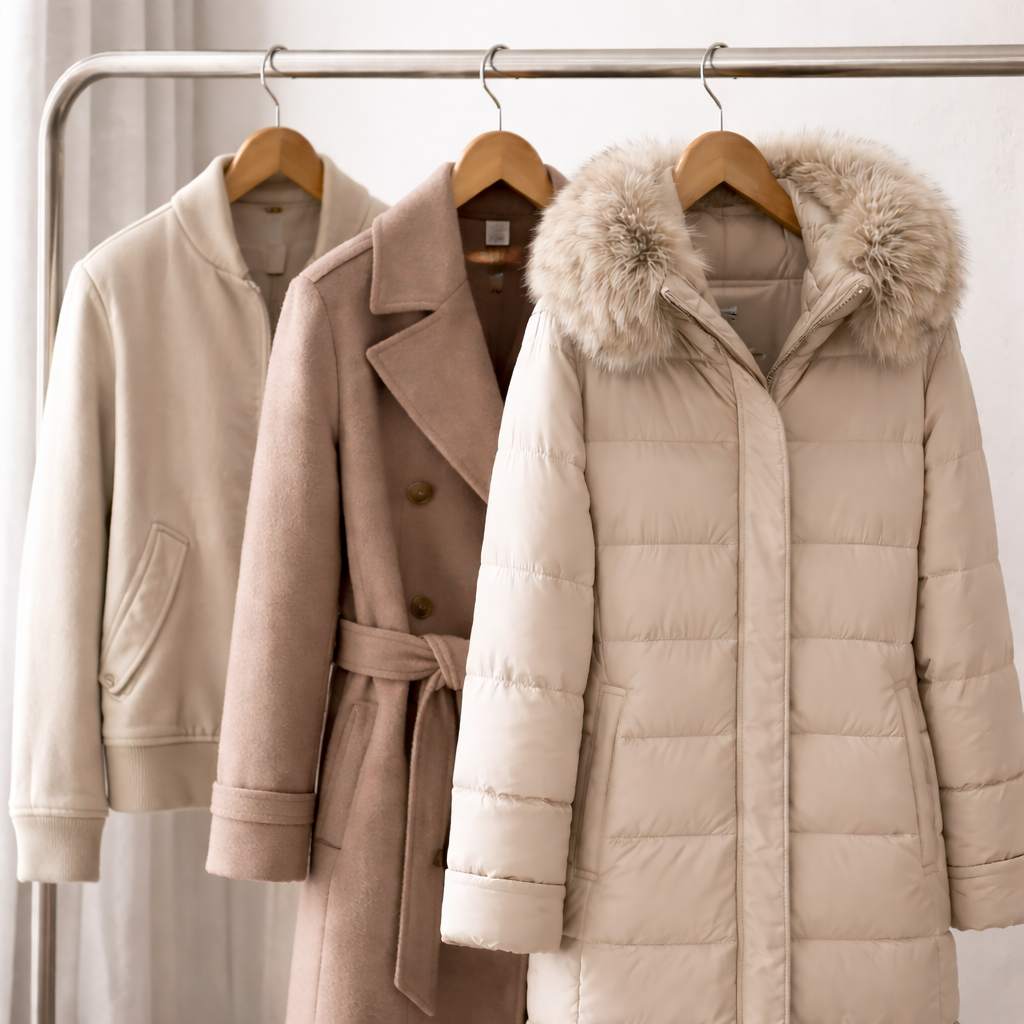
Most wardrobes suffer not from a lack of options, but from too many that solve the same problem. A professional wardrobe does not benefit from owning many coats. It benefits from owning the right ones.
Pieces that earn their place through repeated use, adaptability, and sustained confidence tend to crowd out everything else over time.
Rather than cataloguing every style available, Credence focuses on the small collection of coats that consistently proves complete, regardless of season or where the fashion world is placing its focus.
One example of this principle in practice is the tailored black coat, which functions less as a style choice and more as a structural anchor within a professional wardrobe.
How Credence Narrows the Field
Credence applies the same criteria consistently, treating design longevity, material integrity, functional relevance, and cost per wear as non-negotiable.
This approach immediately excludes many coats that are appealing in isolation but redundant in practice. When several options solve the same problem in nearly the same way, the distinction between them becomes aesthetic rather than functional. Over time, those distinctions matter less than expected.
Credence also favors coats that improve daily decision making rather than complicate it. Pieces that integrate easily into a professional routine, work across settings, and remain comfortable under repetition tend to earn consistent use. Coats that require special planning, styling effort, or situational justification rarely do.
As a result, the list that follows is intentionally narrow. Each coat included earns its place by doing something meaningfully different, or meaningfully better, than the alternatives. The goal is not variety for its own sake, but a collection that feels complete without excess.
The Coats That Earn a Place
Each category below exists because it performs a role the others cannot absorb without compromise. Together, they form a complete system rather than a collection driven by variety.
The Tailored Black Wool Coat (Day to Evening)
This coat serves as the backbone of a professional wardrobe. Its role is to provide structure, authority, and visual clarity across daily work contexts, while remaining refined enough for evening or formal settings when needed. A well chosen black wool coat in a tailored silhouette removes uncertainty. It frames both simple and elevated outfits with ease and carries sufficient presence to feel intentional rather than utilitarian.
It is worn frequently and remembered visually, so quality and proportion matter more here than in almost any other category. This is the coat that should feel immediately right every time it is worn, and difficult to imagine replacing.
A coat in this category should hold structure over time and remain visually consistent with frequent wear. Retailers such as Net-a-Porter and Bergdorf Goodman tend to carry tailored wool coats with the fabric weight and construction required to perform across years rather than seasons.
The Cold Weather Outer Layer
This coat exists for one reason: performance without degradation when temperatures drop significantly. Comfort and protection stop being negotiable, and no amount of styling can compensate for inadequacy. A true cold weather coat earns its place by managing insulation, wind, and weather while maintaining mobility and structure. Bulk that restricts movement or design that collapses under use undermines daily wear, no matter how warm the piece may be.
When this coat is well chosen, winter dressing becomes simpler rather than heavier. It allows the rest of the wardrobe to function as intended.
When insulation and protection matter, quality is less about bulk and more about engineering. Stores like Farfetch and Bergdorf Goodman often stock cold-weather coats that balance warmth, mobility, and longevity without sacrificing structure.
The Transitional and Travel Coat
This is often the most reached for coat in a wardrobe. It handles fluctuating temperatures, movement-heavy days, and changing environments without requiring adjustment or forethought. A strong transitional and travel coat layers easily, resists wear, and adapts across settings, whether worn for daily errands, workdays in shoulder seasons, or time spent in transit. Its value lies in versatility rather than distinction.
Because it appears in so many contexts, this coat benefits most from restraint in design and reliability in construction. It should feel natural rather than noticeable, and trustworthy rather than clever.
Transitional coats benefit from restraint in both design and material choice. Retailers including Net-a-Porter and SSENSE typically offer lightweight wool and technical blends that layer easily and adapt well to movement-heavy days.
The Casual Context Coat
This coat protects standards when formality relaxes. It allows ease without downgrade, ensuring that off duty dressing still feels considered rather than incidental. A casual context coat may prioritize comfort and movement, but it should retain design integrity. It must integrate seamlessly with relaxed clothing while remaining intentional enough to avoid feeling disposable or temporary.
This coat matters because it absorbs a large portion of everyday wear. When chosen well, it prevents casual contexts from eroding the overall quality of a wardrobe.
Casual coats still benefit from considered construction. Multi-brand retailers such as Farfetch or SSENSE often carry relaxed silhouettes that maintain durability and intention without drifting into activewear.
In Practice

A long, tailored wool coat with internal structure maintains clarity of line even after repeated wear. Pieces like the Toteme Classic Doublé wool coat
work because the fabric holds shape, the shoulders are lightly structured, and the silhouette remains intentional rather than collapsing over time. This is what allows a single coat to function across professional settings without feeling overly formal or dated.
Why These Four Are Enough
Together, these coats cover the full range of daily professional life without redundancy. Each solves a specific problem the others cannot, and none exist merely to add variety. Owning more coats than this often increases decision making without improving outcomes. Owning fewer requires compromise.
If you’re thinking about why some pieces truly earn their place over time, and why many so-called “investment” items don’t, we examine that distinction in Why Most “Investment Pieces” Aren’t Actually Worth Investing In.
What This List Intentionally Excludes
This list is not intended to account for every outer layer a person might own. It focuses on coats that play a foundational role in a professional wardrobe, not those worn for narrowly defined tasks. Task specific layers, whether worn to and from exercise, reserved for extreme outdoor exposure, or pulled on solely for dog walking, are intentionally excluded. These items serve logistical needs rather than wardrobe ones.
Pieces designed for single purpose environments or infrequent events may be useful, but they fall outside the scope of daily investment dressing as Credence defines it. Exclusion here is not a value judgment. It is a boundary.
A Complete Wardrobe, Not a Crowded One
A professional wardrobe does not need many coats to function well. It needs a small number that are chosen with clarity and worn with confidence. When each coat earns its place by doing something distinct and doing it well, dressing becomes simpler, not more constrained. The result is not limitation, but ease, and a sense that nothing essential is missing.