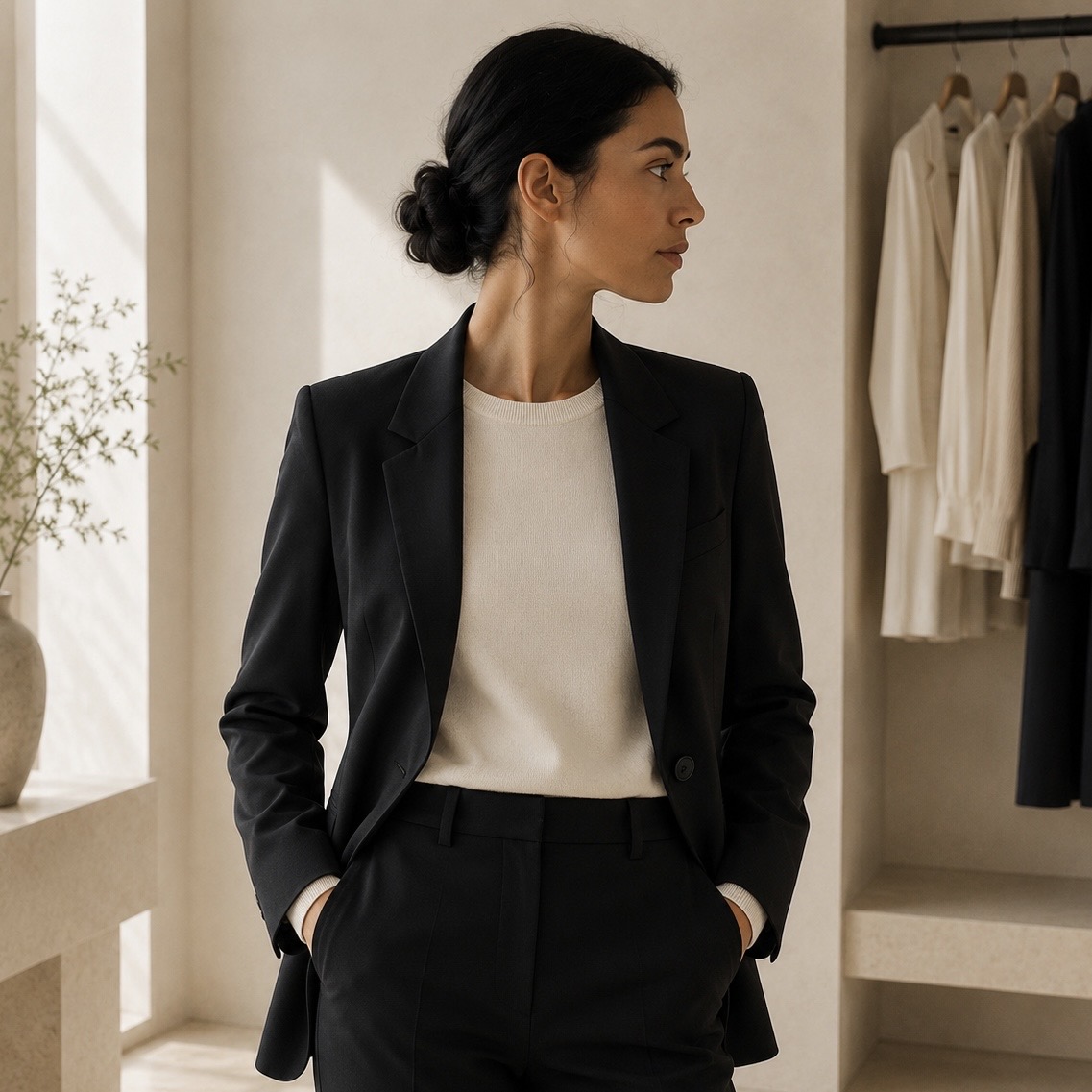
Knitwear is one of the most purchased and most replaced categories in a professional wardrobe.
Many sweaters are appealing when they are new. They feel soft in a fitting room, look good folded on a table, or seem like an easy seasonal update.
Then some begin to pill after only a few wears. Others lose their shape or are hard to style. A sweater that seemed useful at first can feel bulky under jackets, awkward with trousers, or too specific to wear often.
Other sweaters keep working year after year because they fit easily into the wardrobe. They work with tailoring, sit cleanly under coats and blazers, and look appropriate across many occasions.
The difference is usually fabric, construction, shape, and versatile design.
Knitwear should be judged by how often it will be worn and how well it will hold up over time. The pieces worth buying are the ones that are beautiful and will work across outfits, seasons, and years of wear.
If you evaluate a potential purchase in this way, it makes it much easier to buy knitwear that lasts.
Softness Is Not Enough
Many knitwear purchases begin with softness. The sweater feels comfortable when tried on. The color is appealing. The texture feels expensive. It seems like something that will be worn often.
Softness can make a sweater easy to buy. It cannot show whether the sweater will sit neatly under a blazer or hold its shape after regular wear.
The knitwear that gets used for years usually succeeds for more practical reasons. It layers under jackets and coats. It works with tailoring and denim. It can be worn in more than one season. It still looks presentable after the first wave of newness has passed.
Those qualities are harder to judge in a fitting room, but they matter more once the sweater becomes part of everyday dressing.
What Makes Knitwear Worth Buying
The strongest knitwear purchases usually share five qualities: good fabric, an easy shape, a useful layering weight, a color that works with the rest of the wardrobe, and details that do not limit the sweater.
1. Fabric Comes First
Not all fibers wear the same way.
Cashmere, merino wool, lambswool, alpaca, cotton, and silk blends can all be excellent when the yarn and construction are good. The fiber name alone is not enough. Poor-quality cashmere can pill, thin, or lose shape faster than a well-made cotton or merino sweater.
Construction matters as much as composition. Look at the density of the knit, the seams, the ribbing at the cuffs and hem, and whether the fabric seems likely to recover after wear and cleaning. A sweater that already looks loose at the edges when new often becomes worse with use.
Many heavily synthetic knits and low-quality blends are made to reduce cost. They may feel acceptable at first, but they are more likely to pill, stretch, trap odor, or look tired after limited wear.
Fiber content does not guarantee a sweater will last, but it changes the odds.
2. The Shape Has To Be Easy To Wear
Shape has a direct effect on how often knitwear gets worn.
The sweaters that see the most use usually have a simple, easy shape. Clean shoulder lines help them sit neatly under jackets and coats. A little room through the body makes layering easier. Enough length allows them to work with trousers, denim, and skirts. Simple necklines pair more easily with shirts, coats, scarves, and jewelry.
More distinctive shapes narrow the sweater’s use. Very oversized knits can be difficult to layer. Cropped lengths work with fewer trousers and skirts. Balloon sleeves can make jackets and coats uncomfortable.
The more specific the shape, the fewer situations it usually works in.
3. The Weight Has To Support Layering
A professional wardrobe depends on layering.
A sweater may be worn under a blazer, under a coat, over a shirt, or on its own. If the knit is too bulky for those combinations, it becomes more limited than it looked when purchased.
The most useful knitwear has enough substance to look finished, but not so much thickness that it bunches at the armhole, sleeve, or waist. The sleeve should pass cleanly under a jacket. The shoulder should sit neatly. The neckline should not fight with collars, lapels, or coats.
A sweater that works in more combinations has more chances to be worn.
4. The Color Has To Work With What Is Already Owned
Color affects how often knitwear gets worn.
Ivory, cream, oatmeal, camel, taupe, charcoal, navy, and black remain useful because they work with many trousers, skirts, jeans, coats, and shoes. They do not require the rest of the outfit to be built around them.
A strong color can still be a good purchase, but only if it works with enough of the wardrobe. A burgundy sweater that pairs with black, navy, grey, camel, and denim may be more useful than a pale neutral that only works with one pair of trousers.
The question is not whether the color is neutral. The question is how much of the wardrobe it can support.
5. The Details Should Not Control The Sweater
Details can make knitwear appealing in the store. They can also make it harder to wear.
Large buttons, novelty textures, oversized logos, heavy embellishment, and highly recognizable seasonal details draw attention to themselves. Over time, they often become the reason a sweater feels dated or difficult to wear.
The strongest knitwear is usually carried by the fabric, cut, and fit rather than by decoration. A small detail can work. A detail that defines the sweater usually limits it.
The Knitwear Categories Worth Owning
Most professional wardrobes do not need a large knitwear collection. They need a few sweaters that fill different roles and work with the clothes already in the wardrobe.
Fine-Gauge Crewneck
A fine-gauge crewneck is one of the most useful sweaters a woman can own.
It layers comfortably under blazers, coats, and jackets. It works with tailored trousers, denim, and skirts. It can be worn on its own or as part of a layered outfit.
Because the shape is simple, it can move between work, travel, errands, and less formal days without looking out of place.
Examples Worth Considering
John Smedley Dillie Jumper – a fine merino crewneck that is smooth enough under tailoring, clean enough on its own, and less delicate than very soft cashmere.
Falconeri Ultrafine Cashmere – cashmere softness without the bulk that makes knitwear difficult under jackets and coats.
William Lockie Charlotte Crew – the classic cashmere crewneck as a wardrobe layer, not a statement. The simple shape and clean finish make it useful over shirts, under coats, and with tailored trousers.
Fabiana Filippi Cashmere Sweater – excellent when chosen in a plain, restrained version. Buy it for the fabric and fit and skip versions with sequins, shine, logos, or decorative trim that limits repeat wear.
Loro Piana Neo Piuma Crewneck – a polished under-jacket crewneck at the luxury end of the category. Its value is the combination of lightness, softness, and a clean shape that makes tailoring feel finished without adding bulk.
Fine-Gauge Turtleneck Or Mock Neck
A fine-gauge turtleneck or mock neck fills a similar role in colder months.
The higher neckline creates a clean look under jackets and coats while adding warmth without bulk. It also removes the need for a shirt collar, which can make tailored outfits feel simpler and sharper.
The best versions are thin enough to layer, close enough to avoid bunching, and plain enough to work across many outfits.
Examples Worth Considering
John Smedley Aofie Roll Neck Jumper – a superior quality fine merino roll neck sharpens a winter outfit without needing a shirt collar. It adds warmth and structure under blazers and coats without the bunching of a thicker knit.
Theory Turtleneck Sweater in Regal Wool – an excellent professional turtleneck with a simple neckline and fine knit that make it easy to wear under jackets in the core wardrobe colors.
Loro Piana Neo Piuma Turtleneck – One of the best in class, that gives the higher neckline and polish of a roll neck while keeping the silhouette light.
Refined V-Neck
A v-neck softens a tailored outfit without making it casual.
It works particularly well over shirts because it leaves the collar visible. It can also be worn on its own when the neckline is clean and not too deep.
The best versions have a controlled neckline, a neat shoulder, and an appropriate length. The weight should be substantial enough to wear over a collared shirt without the shirt fabric showing through, while still clean enough to sit under a coat or relaxed jacket. A v-neck that is too deep, too bulky, or too relaxed quickly becomes harder to use in a professional wardrobe.
Examples Worth Considering
Eric Bompard Classic V-Neck Pullover – the simple neckline keeps it professional, while the cashmere weight gives it more presence than a thin, sheer layer. Great for layering over a shirt.
William Lockie Charlotte Vee Neck Cashmere Sweater – excellent quality cashmere with the right weight and shape.
Elevated Cardigan
A cardigan can replace a jacket in less formal settings, but only when it has enough shape to look finished.
The strongest versions have a clean front, long sleeves, good fabric, and enough structure to sit well over blouses, shirts, dresses, and fine-gauge knitwear. They should look appropriate with tailored trousers without needing a blazer over them.
Many cardigans fail here because they are too oversized, too soft, too cropped, or too close to loungewear. A cardigan that collapses when worn open rarely works as a jacket substitute.
Examples Worth Considering
Bompard Cashmere Cardigan – choose a versatile color with a finished front and long sleeves so it works over blouses, shirts, and fine knits without slipping into loungewear.
Knitwear That Usually Becomes Expensive To Own
Some sweaters become expensive because they need to be replaced repeatedly. Others become expensive because they spend most of their time unworn.
Very Delicate Cashmere
Cashmere can be excellent, but softness alone is not a sign of quality.
Very lightweight cashmere can pill, thin, or develop holes sooner than expected. A sweater that looks beautiful when purchased may require more care, more repairs, and earlier replacement than anticipated.
For a professional wardrobe, the best cashmere is not always the softest sweater in the store. It is the sweater with enough strength to handle regular wear.
Short-Term Shapes
Knitwear trends change quickly. One season favors oversized sweaters. Another favors cropped lengths. Sleeves become larger. Shoulders become more exaggerated.
A sweater built around one current shape can lose its use once that shape starts to feel dated. This matters most when the design also affects layering, coat fit, or how the sweater works with trousers and skirts.
Poor-Quality Blends
Some lower-quality blends begin showing wear quickly.
They pill, stretch, lose shape, or develop a tired surface after limited use. This is especially frustrating when the sweater still technically fits but no longer looks sharp enough for work.
A low price does not always make a sweater inexpensive. If it needs to be replaced after one season, the cost becomes part of the purchase.
Statement Knitwear
Large patterns, novelty textures, oversized logos, and recognizable seasonal details can make a sweater more appealing at first.
They also reduce how often it can be worn. The more recognizable the design, the more easily it becomes the focus of the outfit. That may be useful for a few specific looks, but it usually limits regular wear.
The Best Sweaters Often Look Plain At First
Many of the sweaters that get worn most are easy to overlook when shopping.
A simple crewneck in a useful color rarely attracts as much attention as an unusual shape, a striking detail, or a seasonal color. It may not feel like the most exciting choice in the moment.
But it may be the sweater worn under a blazer on Monday, with denim on Friday, under a coat while traveling, and with tailored trousers on a cold morning. That kind of use is difficult to notice on a hanger.
The best knitwear often proves itself after purchase, not before it, unless you shop with this standard already in mind.
Questions To Ask Before Buying Knitwear
Before buying a sweater, ask a few practical questions:
- Can it be worn under a blazer without feeling bulky?
- Does it work with the trousers I wear most often?
- Can it be worn in more than one season?
- Would it still look right if current trends disappeared?
- Is the fabric likely to hold its shape and appearance with regular wear?
- Does it replace a weaker sweater already in the wardrobe, or is it functionally the same as something already owned?
The answers will reveal how useful the sweater will actually be.
A Smaller, Better Knitwear Wardrobe
The best knitwear is rarely the sweater that attracts the most attention when shopping.
It is the sweater that works with the rest of the wardrobe again and again. It layers under jackets and coats, works with the trousers already being worn, holds its shape, and remains presentable after regular use.
A professional wardrobe does not need more sweaters by default. It needs fewer weak purchases and more sweaters with good fabric, clean shape, and real use.
That is the standard for knitwear worth buying.