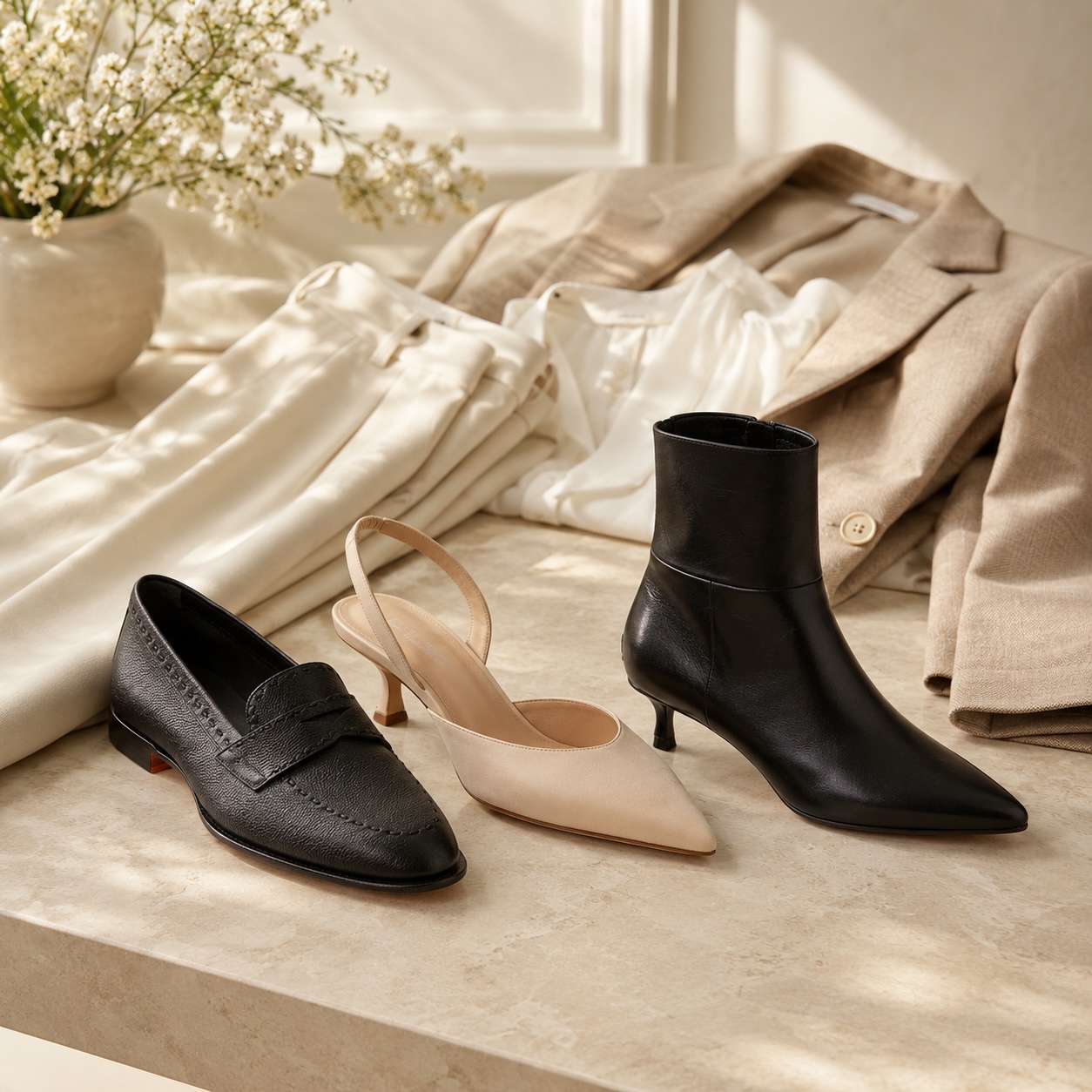
A professional wardrobe can be full of good clothes and still feel difficult if the shoes are wrong.
The trousers fit. The blazer works. The dress is simple and useful. Then the wrong shoe changes everything.
A flat can make tailoring feel unfinished. A heel can make a normal workday impractical. A boot can fight the hem of a trouser. A sandal can make an otherwise polished outfit feel too casual.
Shoes decide whether the outfit works on the body, not just on the hanger. They affect trouser length, dress shape, coat weight, and how formal the whole look feels. They also decide whether the outfit can last through meetings, errands, travel, dinner, and the walk between them.
This is where many professional wardrobes start to fail.
The problem is rarely a lack of shoes. It is usually a lack of shoes that serve the woman’s actual life. She may own dinner heels, soft flats, trend boots, delicate sandals, and beautiful pairs that only work with one outfit. Each pair has a reason to exist. Few of them make daily dressing easier.
A useful professional shoe has to connect the clothes to the day. The first priority is for it to make long hours easier to move through. The second is for it to make trousers easier to wear, dresses easier to style, tailoring easier to finish, and the whole outfit better, not compromised.
That is the standard. A shoe is worth buying when it helps the wardrobe work without making the outfit less beautiful.
How to Evaluate a Shoe Before Buying It
A shoe should pass five tests before it is assigned a place in the wardrobe.
First, does it work with the clothes already owned? If a shoe requires new trousers, a different dress, another coat, or a separate group of outfits to make it useful, it adds work. The better shoe fits into the wardrobe that already exists.
Second, what kind of day does it serve? The question is not what kind of shoe it is, but what kind of day it serves. Is it for regular workdays, sharper meetings, cooler weather, warm weather, or evening occasions? A shoe becomes easier to judge when the need is clear.
Third, what does it do to the outfit? The shoe should keep the outfit at least as strong as it was before the shoe was added. The hem should look right. The dress should still feel current. The blazer or coat should look finished. The shoe should not make the outfit heavier, weaker, too casual, or harder to wear.
Fourth, can it last through the day it is meant to serve? A daily shoe needs more comfort than an occasion shoe. A meeting shoe can be sharper, but it still has to be wearable enough to reach for again.
Fifth, how it will age? The upper should hold its shape. The leather or suede should keep its surface. The heel and sole should not look tired after a few wears. A shoe that wears out visually too quickly stops helping the wardrobe.
After those tests, start with the most useful gap. For some women, that will be a low heel. For many, it will be a flat or loafer, especially when the wardrobe already has enough shoes for dressed-up days.
The regular-day shoe is often the pair that changes the wardrobe most.
The Polished Flat or Loafer
When the gap is the regular-day shoe, the polished flat or loafer is usually the first place to look.
It works with trousers, straight-leg denim, simple dresses, knitwear, blazers, and coats. It gives the outfit ease without making it look casual.
This is why a good flat often matters more than another heel. Most women already have shoes for dressed-up moments. The harder gap is the regular day: polished enough for work, comfortable enough to wear, simple enough to repeat.
The right flat has shape. The leather or suede should look clean. The toe should be refined, not blunt or overly sweet. The upper should hold the foot without collapsing at the sides. The sole should have enough weight to look right under trousers, without making the outfit feel heavy.
Fit is especially important. A polished flat should sit close to the foot. It should not gap, sag, pinch, or vanish under a trouser hem. With full-length trousers, the shoe still needs enough presence to make the hem look deliberate.
The weakest versions are easy to spot. A soft ballet flat can make tailoring look unfinished. A chunky loafer can make clean trousers feel clumsy. Novelty hardware dates quickly. A very square toe can look current for one season and tired the next.
Loafers also need to suit the rest of the wardrobe. A heavy menswear shape can work beautifully for some women. In a wardrobe built around softer tailoring, fine knits, slim coats, and lower-volume trousers, it may overpower everything around it.
The best polished flat or loafer is quiet, shaped, and repeatable. It works when a heel is too much and a sneaker is too casual.
That is why it earns its place. It supports more real days than almost any other shoe in the professional wardrobe.
Examples Worth Considering
Santoni Marlene Leather Penny Loafer – a strong example of the structured office loafer: clean leather, a shaped toe, and enough substance to sit properly under trousers. This is the best choice when the wardrobe needs a flat that still feels like a real shoe, not a soft slipper.
The Row Adam Two Loafer – a quieter, softer option with the kind of low, elongated shape that works well with full-length trousers. It is useful when the wardrobe leans toward simple tailoring, fine knits, and low-contrast dressing.
Loro Piana Joan Loafer – a soft suede loafer for a more relaxed professional wardrobe. It works best when the goal is ease without looking casual, especially with cream trousers, lighter neutrals, straight denim, and softer jackets.
The Low Heel Pump or Slingback
The low heel pump or slingback is the shoe for sharper days.
It works for meetings, dinners, tailored trousers, simple dresses, and any outfit that needs more lift than a flat. The heel should add polish without making the day harder.
The useful height is low to moderate. It should allow the woman to walk, stand, commute, and move without planning the day around the shoe. If the heel only works from the car to the table, it belongs with occasion shoes.
Shape matters. A pointed or almond toe usually works well with tailored clothing because it keeps the foot clean under trousers and dresses. The sides should sit smoothly on the foot. The heel should feel steady. The leather or suede should keep its surface after repeated wear.
This shoe also affects trouser length. It should give enough height for the hem to fall cleanly, without forcing the whole wardrobe to be hemmed around one pair. A heel becomes less useful when it only works with one trouser length.
The weakest versions are easy to recognize. Very high heels are too limited for regular use. Thin straps often feel too evening-focused. Loud logos pull attention down. Overly fine soles can look fragile under wool trousers or a coat.
A slingback can be especially useful because it feels polished without the formality of a full pump. The strap still has to stay in place. If it slips, the shoe changes the walk.
The right low heel does not need to be dramatic. It needs to be worn often enough to matter.
That is why this category earns its place. It gives a professional wardrobe lift without making the shoe the focus.
Examples Worth Considering
Manolo Blahnik Carolyne 50 Slingback Pumps – a strong example of the low slingback: modest heel, clean almond toe, and enough dress to work with trousers, dresses, and evening plans. This is the best choice when the wardrobe needs polish without the height or severity of a full pump.
Gianvito Rossi Robbie 55 – a sharper low-heel option with a pointed toe and a clean line under trousers. It works well when the goal is a little more lift and length, while staying with a heel height that can be worn for the whole day.
Toteme Patent Loafer Pumps – a useful hybrid for a wardrobe that prefers covered shoes. The loafer shape keeps it grounded, while the low heel gives the trousers and denim more finish. Best for cooler days or office settings where a slingback feels too bare.
The Refined Ankle Boot
The refined ankle boot is the cooler-weather shoe in a professional wardrobe.
It works under full-length trousers, with straight-leg denim, and with coats. It gives the outfit more coverage without making it look heavy.
The best ankle boot usually stays quiet. It sits cleanly under trousers, supports the hem, and makes colder-weather dressing easier. It should not force the whole outfit to work around the boot.
Start with the shape. The shaft should be clean and narrow enough to fit under trousers without catching the fabric. The toe should be slim or softly tapered. The heel should be manageable for walking, standing, and a full day of wear.
Smooth leather or suede is usually the most useful. The surface should keep looking polished with use. If the leather creases deeply, softens quickly, or looks tired after a few wears, the boot will age badly.
The sole needs enough weight for the season, but not so much that it makes tailored trousers look clumsy. Heavy hardware pulls attention down. Western shaping, sharp angles, and trend details can work when they are already part of a woman’s style. They are weaker as wardrobe foundations.
Shaft height is often where ankle boots fail. A boot that rises too high can fight trouser hems and create bunching. A boot that cuts awkwardly can make skirts and dresses harder to wear.
The right ankle boot gives coverage, polish, and ease. It makes coats, trousers, and denim feel finished in colder weather.
That is why it earns its place. It solves a real seasonal problem without becoming the center of the outfit.
Examples Worth Considering
Jimmy Choo Lory Calf Leather 35 Boot – a clean office ankle boot with a low heel, pointed toe, and smooth leather upper. It works best when the wardrobe needs a sharper boot for tailored trousers, slim coats, and polished workdays.
The Row Liisa Kitten Boot – a quieter trouser boot with a slim shape and low heel. It is strongest when the goal is a boot that disappears neatly under full-length trousers without adding bulk.
Aeyde Sofie Leather Ankle Boot – a great lower-price example of the same principle: clean leather, pointed toe, and a manageable heel. It gives the wardrobe a refined ankle boot without heavy hardware, lug soles, or trend detail.
The Warm-Weather Professional Shoe
The warm-weather professional shoe is conditional.
In a warmer climate, it may be worn constantly. In a traditional office, it may only work for commuting, dinners, travel, or off-duty dressing.
Heat does not lower the standard. A sandal, mule, or low slingback still needs shape, security, and enough structure to work with tailored clothing.
The best versions are clean and controlled. The straps are minimal. The fit is secure. The sole looks refined. The leather has enough body to avoid looking thin, limp, or plasticky.
Color matters because these shoes are often more visible. Black works well with black, white, cream, and denim. Tan, taupe, or soft beige can soften lighter trousers, linen, cotton, and summer dresses. The color should already belong with the wardrobe’s neutrals.
The weakest versions are too bare, too slippery, or too casual. Vacation sandals make tailoring look unfinished. A mule that slides with every step changes the walk. Heavy platforms make simple trousers feel clumsy. Very thin straps can move too far into evening or resort dressing.
Ease should not mean collapse.
The right warm-weather shoe keeps the outfit polished in heat. It gives the foot air without making the whole look feel exposed.
This category earns its place when the climate, dress code, and daily life require it.
Examples Worth Considering
Santoni Carla Suede Loafer – a strong warm-weather office loafer: light suede, covered foot, clean shape, and enough structure to work with pale trousers. It gives summer outfits ease without making them look casual.
Gianvito Rossi Ascent 55 Slingback – a closed-toe slingback for warmer days that still need a sharper shoe. The covered front keeps it appropriate with trousers and dresses, while the open back makes it lighter than a full pump.
Loro Piana Joan Loafer in Sunrise Clouds – a soft neutral loafer for a relaxed professional wardrobe. It works best with cream, beige, taupe, white denim, and lighter summer trousers when the outfit needs softness without losing shape.
Gianvito Rossi Minorca Raffia and Leather Slingback – a seasonal option for warm climates and less traditional offices. The woven material feels lighter than leather, but the closed toe and heel keep it more office-appropriate than a bare sandal.
The Occassion Shoe
The occasion shoe is the smallest shoe category in a professional wardrobe.
One pair may be needed for dinners, events, weddings, and evening work occasions. It should feel special enough for a dressed-up setting, but useful enough to wear again.
Many occasion shoes become too narrow. A pair bought for one dress, one event, or one color often has nowhere to go afterward. It may still look beautiful. It just does not do enough.
The better occasion shoe has range. It works with a dress, tailored trousers, or a skirt. It feels appropriate at night without looking theatrical.
A slim heel usually works best. The material should feel refined: smooth leather, suede, satin, or a quiet metallic. The color should connect to evening pieces already in the wardrobe. Black, deep brown, soft nude, champagne, pewter, or muted gold often repeats more easily than a strong color chosen for one outfit.
Shape matters as much as material. A clean sandal, pump, or slingback will usually work harder than a heavily decorated shoe. The lines should be simple enough to pair with more than one hem, fabric, and level of dress.
The weakest occasion shoes are uncomfortable, overdecorated, or tied to one look. Statement heels can work when they are part of a woman’s real style. They are a poor substitute for a reliable dress shoe.
An occasion shoe is worth buying only when it can serve more than one occasion.
It does not need to be plain. It does need enough range to wear again.
Examples Worth Considering
Gianvito Rossi Portofino 70 – a clean occasion sandal with enough restraint to repeat across dinners, weddings, and evening work events. The simple straps and moderate heel make it useful with dresses, skirts, and tailored trousers.
Jimmy Choo Bing 65 – a more decorative option for wardrobes that can support shine. The pointed toe and lower heel keep it wearable, while the crystal strap makes it better for evening than regular professional dressing.
Manolo Blahnik Carolyne Satin 70 – a covered evening slingback with a dressier surface and a proven shape. It works well when a sandal feels too bare, but a full pump feels too formal.
Shoes That Usually Create Wardrobe Clutter
Some shoes add decisions instead of solving them.
They may be beautiful, expensive, or well made. They may work for one dinner, one outfit, or one season. The problem starts when those are treated like core wardrobe shoes.
The first is the heel that is too high for real days. It may look polished, but it changes the day around it. If a shoe cannot handle walking, standing, or moving between appointments, it will not be worn often enough to matter.
Sale shoes create another problem. A lower price does not give the shoe a role. The pair still has to work with the clothes, climate, dress code, and real day.
Trend shapes can become difficult quickly. A very square toe, heavy sole, unusual heel, or specific boot shape may work with one hem length and one season. Later, the shoe starts limiting what can be worn with it.
Duplicate black shoes are common. Black is useful, but several black pairs with no clear or differentiated job do not make the wardrobe stronger. One may be a daily flat, one a polished heel, one a boot, and one an evening shoe. Without those differences, the closet fills while the outfits still feel unfinished.
Flats can also create clutter. Some look polished online, then collapse on the foot. Soft leather, thin soles, and loose uppers may photograph well, but they can make tailored clothing look weaker in real life.
Warm-weather shoes need the same scrutiny. Sandals that are too bare can make professional clothes look like vacation clothes. Mules that slip change the walk. Heavy platforms make simple trousers look clumsy.
Boots cause problems when they demand too much. A boot that requires the whole outfit to be built around it may be a style choice, but it is rarely a wardrobe foundation.
These shoes are not automatically wrong. They may have a place when the role is clear.
They should not be mistaken for the pairs that carry the wardrobe.
How Many Shoes a Professional Wardrobe Actually Needs
The answer is role-based.
A professional wardrobe does not need more shoes. It needs the right shoes for the days a woman actually lives.
For many women, the core is simple: one polished flat or loafer, one low heel pump or slingback, and one refined ankle boot. Those three pairs can cover most work outfits: trousers, dresses, denim, knitwear, blazers, and coats.
Some wardrobes need additional pairs. A woman in a warm climate may need a clean sandal, mule, or low slingback that still works with tailored clothing. A woman with frequent dinners, events, or weddings may need one or two occasion shoes.
Duplicates can be useful when the difference is clear. One loafer may be black leather for work. Another may be softer suede for casual days. One low heel may work with dark tailoring. Another may work better with lighter dresses or summer trousers.
Duplication becomes clutter when the roles blur. Several black flats, several similar heels, or several boots with no clear difference do not create a stronger wardrobe. They create more hesitation.
A strong shoe system may include:
- one polished flat or loafer
- one low heel pump or slingback
- one refined ankle boot
- one warm-weather professional shoe, if climate requires it
- one occasion shoe, if lifestyle requires it
That is actually enough for many wardrobes.
The exact number can change with climate, commute, dress code, and wear frequency. The standard does not change. Every pair should have a job.
Shoes Should Reduce Decisions
The right shoes make a wardrobe easier to use.
They help trousers fall cleanly, make dresses easier to wear, and finish tailoring without making it feel stiff. They let the woman move through the day without rebuilding the outfit around her feet.
A shoe is worth buying when it supports the clothes already in the wardrobe. It should hold its shape, keep its surface, and earn repeat wear across real days.
The best pairs are often the least dramatic ones. They are the shoes reached for again and again because they make the rest of the outfit work.
That is the point of a professional shoe wardrobe: clearer roles, fewer pairs, less hesitation.