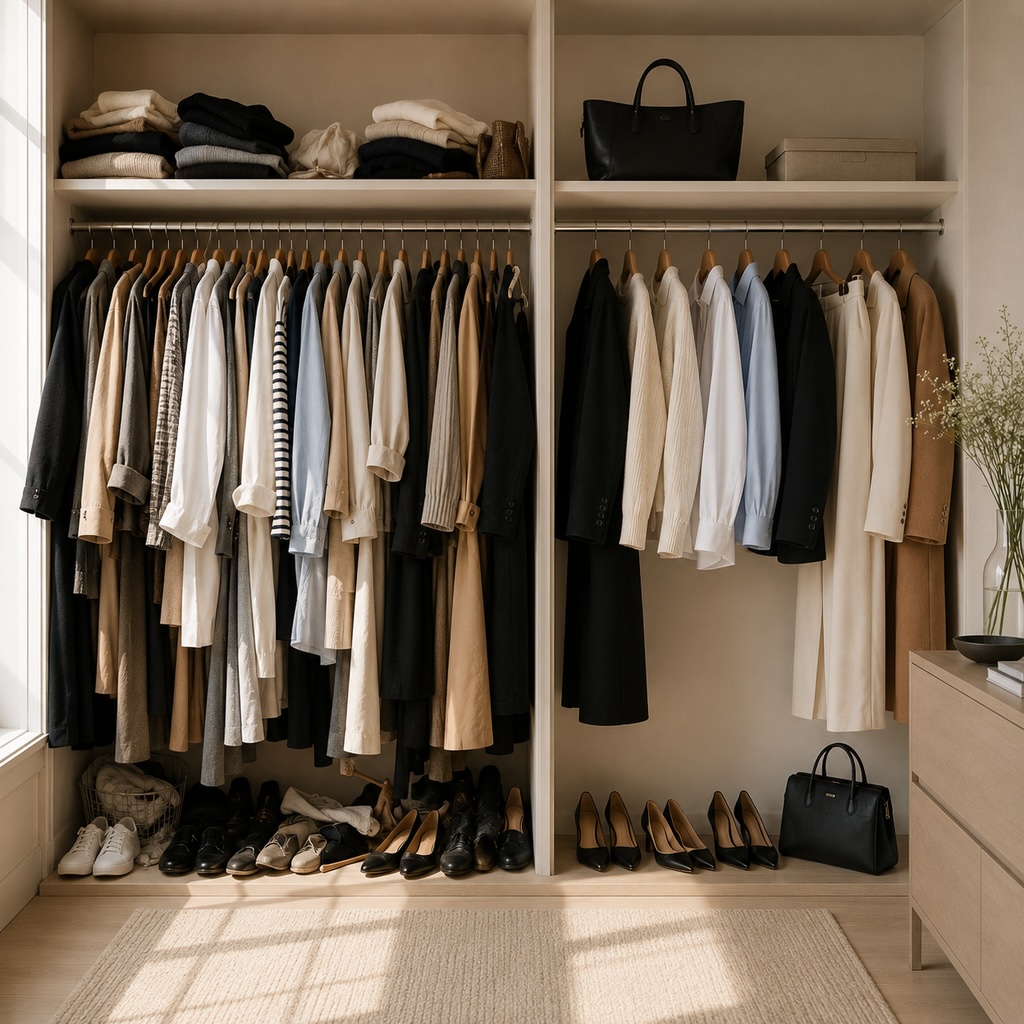
Most wardrobe problems do not begin with having too few clothes.
They begin with having too many pieces that only work under the right conditions.
This is why a closet can be full while getting dressed still feels difficult. There may be plenty to choose from, but too little that feels reliable the moment it is needed. The trouser that works only with one shoe. The blouse that needs the right bra, the right jacket, and the right mood. The blazer that looks polished with one outfit and oddly wrong with everything else. The dress that felt useful when purchased, then quietly became too formal for daytime and not quite special enough for evening.
Nothing is obviously wrong. That is what makes the problem so frustrating.
Each piece seemed reasonable on its own. Each purchase appeared to fill a gap. But once everything is inside the wardrobe together, the gaps remain. Getting dressed becomes a process of negotiation: this works only if that is clean, that works only if the weather is right, those shoes work only if the hem is exact.
The closet grows, but daily life does not get easier.
A functional wardrobe feels different. It does not require constant adjustment, substitution, or mental accounting. The pieces have clear jobs. They work with one another. They support the life being lived rather than asking to be managed every morning.
The strongest wardrobes create a quiet kind of relief. Getting dressed becomes faster. Confidence becomes more consistent. Less time is spent standing in front of clothes, trying to assemble an outfit from pieces that never fully agreed to work together.
The Difference Between Quantity and Coverage
A full wardrobe can still leave a woman underdressed for her actual life.
A wardrobe can be crowded and still fail to cover the whole week.
Quantity means there are many items in the closet. Coverage means the wardrobe can handle the recurring realities of the week: work, errands, dinners, travel, weather, long days, movement, and the moments when there is no time to think about clothes.
Most wardrobes expand in quantity long before they expand in usefulness.
There may be several dresses for events, but no reliable outfit for an ordinary workday when the best trousers are at the cleaners. There may be multiple pairs of shoes, but only one that works for a day involving meetings, walking, and dinner afterward. There may be a row of blouses, but half require special base layers, specific trousers, or a jacket to make them feel complete.
The wardrobe looks flexible until ordinary life starts testing it.
That is why shopping often continues even when the closet appears full. The feeling that something is missing is usually accurate; often, the missing thing is not another item, but a role the wardrobe still cannot handle well.
A wardrobe can contain ten pairs of trousers and still depend on the same two. The others may be technically wearable, but each introduces a small complication. One works only with heels. Another looks wrong with longer coats. One wrinkles too quickly for a full day. Another requires a very specific top to feel balanced.
No single item explains the frustration on its own. The pattern does: the accumulation of pieces that almost work, but not easily enough.
Over time, the wardrobe becomes denser without becoming more dependable. There are more choices, but not more certainty. More pieces, but not more solutions. More visual possibility, but still the same morning frustration.
Emotional Purchasing and the Illusion of Difference
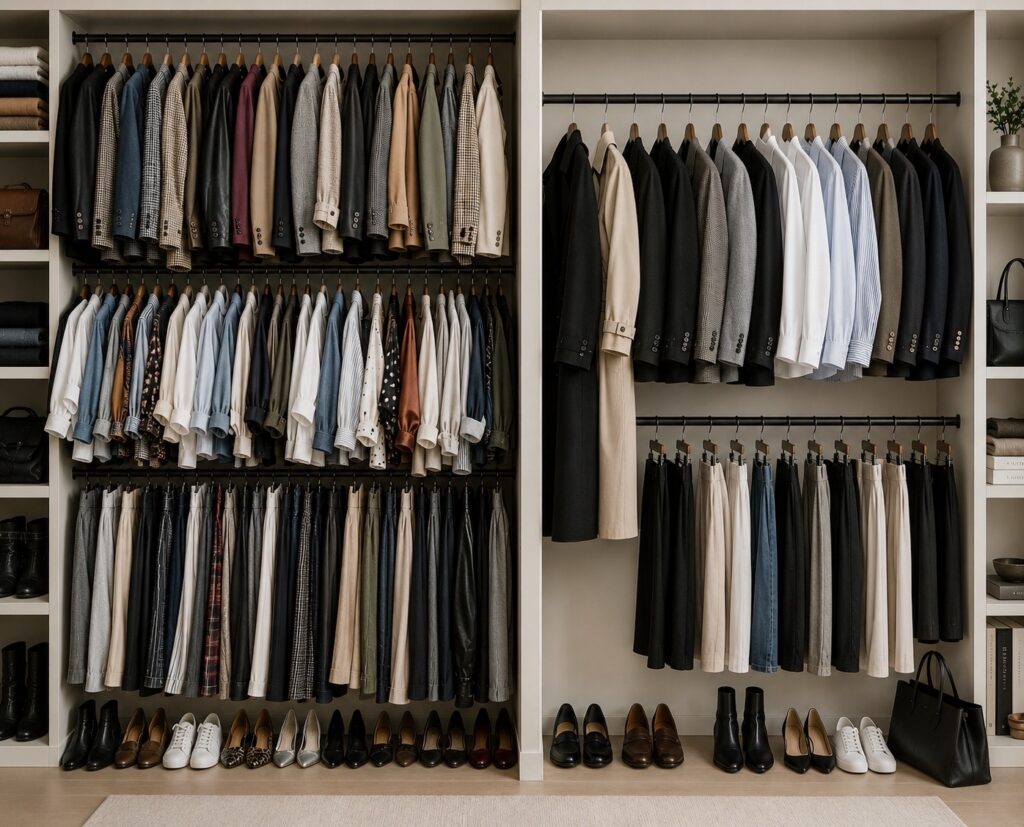
Most overlap enters a wardrobe gradually.
A purchase feels justified because some detail appears meaningfully different:
- a wider leg
- a softer shoulder
- a different shade of camel
- a different neckline
- a cleaner shape
- a more current cut
Viewed alone, the difference can feel powerful. Sometimes it can feel urgent.
This is the emotional part of shopping that rarely gets acknowledged honestly. A piece can seem capable of changing more than an outfit. It can seem capable of changing how a woman feels in her life. More polished. More composed. More at ease. More successful. More restrained. More interesting. More herself.
That feeling is real, but shopping from it does not always translate into a more useful wardrobe.
A black blazer may feel sharper, calmer, more authoritative, or more expensive-looking than the one already owned. Neutral knitwear can suggest ease, softness, restraint, or understated luxury. A coat can feel more editorial or more refined despite serving nearly the same daily role as several others already in the closet.
The emotional distinction can be substantial during purchase.
The practical distinction inside the wardrobe may be much smaller.
This is how intelligent people make purchases that create unintentional redundancy. They are not mistakes in the obvious sense. They often represent a very specific desire: to feel more capable, more polished, more prepared, more like the version of oneself the wardrobe is supposed to support.
Wanting that feeling is understandable. Repeating the purchase without solving the underlying wardrobe problem is where the closet starts to fill without becoming easier to use.
Role Clarity
A strong wardrobe is not built by asking how many pieces it contains.
It is built by asking whether the important roles are covered.
Those roles are different in each category.
Outerwear may need one polished coat for professional and evening settings, one practical layer for extreme weather, one lighter transitional coat, and one casual option that still looks intentional.
Shoes may need a comfortable walking option, a polished daily option, an evening/social option, and a weather-aware option for travel or imperfect conditions.
This is where the framework becomes practical. Before adding another piece, the question is not only whether it is beautiful or useful in theory. The question is whether it fills a role the wardrobe still cannot handle well.
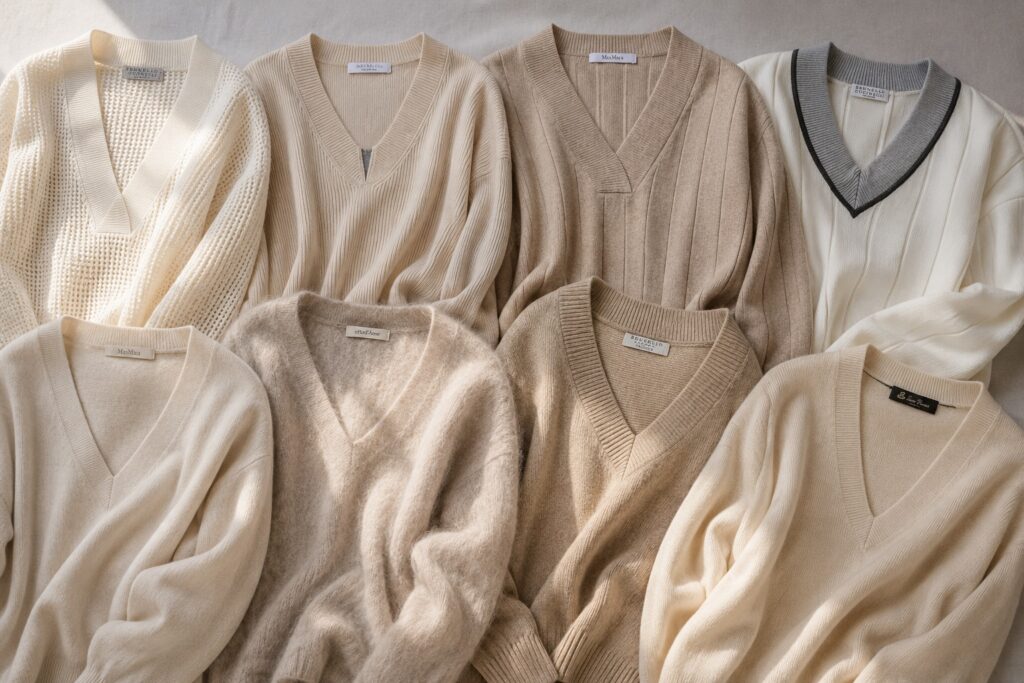
Another neutral sweater may be appealing. Another almost-work trouser may feel sensible. Another black shoe may seem safe. But if the wardrobe still lacks the shoe that makes dresses, trousers, walking, and dinners easier, the actual gap remains.
The wardrobe gains another item, but the week is no easier to dress for.
Strong wardrobes become more useful when neglected roles are filled. Less effective wardrobes keep adding new versions of roles that are already crowded.
The outerwear role structure is explored further in The Only Coats Worth Buying for a Professional Wardrobe.
The underlying definition of an investment piece is outlined in What Actually Qualifies as an Investment Piece…and What Doesn’t.
Wardrobe satisfaction rarely comes from having the most options.
It comes from knowing the right answer is already there.
The Pieces That Improve Everything Around Them
Once the major roles are clear, some pieces start carrying more responsibility than others.
A strong coat can make simple trousers and knitwear feel finished. Reliable trousers can make more blouses, sweaters, and jackets usable. The right shoe can unlock dresses, trousers, dinners, walking, and travel because it works with the wardrobe instead of forcing separate solutions for each setting.
This is where the word “investment” starts to mean something specific.
A piece has value because it is beautiful, expensive, or well made while still adding very little to the wardrobe. Its real value shows when it makes other pieces easier to wear.
The pieces that require a specific shoe, layer, hem, coat, or kind of day may still be loved. They may still have a place.
They simply should not be mistaken for wardrobe anchors.
A wardrobe anchor reduces the number of conditions attached to getting dressed. It makes more combinations possible, more days easier, and more of the closet usable.
A beautiful purchase can stand on its own. A high-leverage piece improves everything around it.
Investment Examples
There are a few categories where one well-chosen piece can quickly reduce wardrobe friction. These are not the only important categories, but they are often the most visible places to begin.
Tailored Black Coat
A structured black wool coat can replace several weaker outerwear options because it finishes so many outfits at once. It can work over tailoring, knitwear, dresses, trousers, travel clothing, and evening looks without requiring the rest of the outfit to be rebuilt around it.
Suggested examples to consider:
Why this category matters:
A strong coat creates polish before the outfit underneath is even fully visible. It reduces the need for multiple novelty coats, trend coats, and occasion-specific layers that only work under narrow conditions.
Tailored Trousers
Reliable trousers reduce more wardrobe friction than almost any other category. The best ones work across different tops, shoes, coats, and parts of the day without collapsing, wrinkling excessively, or requiring a very specific styling formula.
Suggested examples to consider:
The trouser category is explored more in The Only Trousers Worth Buying for a Professional Wardrobe.
Why this category matters:
When trousers are wrong, the entire outfit becomes harder. When trousers are right, far more of the wardrobe becomes wearable.
Daily Professional Bag
A true daily professional bag should carry the actual requirements of the day while still looking refined enough for meetings, travel, errands, and dinner afterward. It should reduce the need for constant bag changes instead of creating another narrow use case.
Suggested examples to consider:
Why this category matters:
A strong work bag removes an entire layer of wardrobe friction. It should hold what daily life actually requires without making the outfit look too casual, too corporate, or too compromised.
A Wardrobe Should Reduce Mental Load
The best wardrobes create relief because they become easier to trust, not because every outfit is perfect.
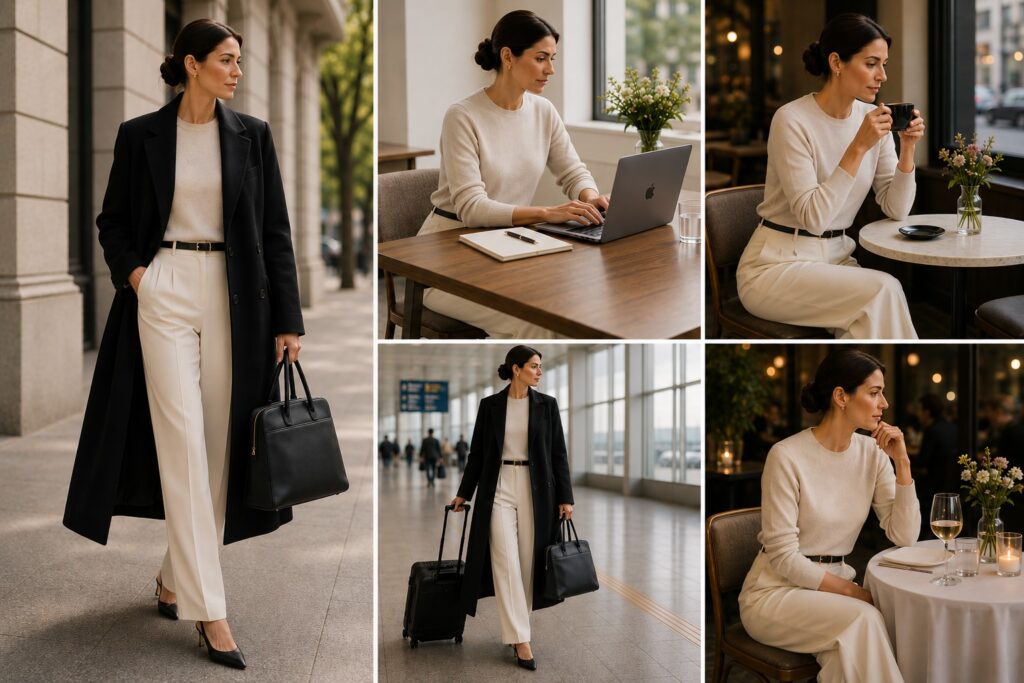
The pieces continue working across ordinary life: workdays, dinners, errands, travel, weather changes, movement, repetition, and the mornings when there is no extra time. A woman does not have to keep solving the same dressing problems over and over again.
Confidence becomes more consistent because fewer pieces feel unstable.
Less energy is spent adjusting, compensating, changing shoes, changing bags, changing trousers, or managing clothes that seemed promising individually but never became reliable in daily life.
The wardrobe stops behaving like a collection of separate purchases.
It begins functioning as support for your life and goals.
Why This Matters
Emotion does not need to be removed from shopping.
The desire to feel polished, composed, luxurious, authoritative, at ease, or more fully oneself is often the reason clothing matters in the first place. Those feelings are not frivolous. They are part of what a good wardrobe should provide.
A stronger wardrobe attaches those feelings to pieces that can actually support ordinary life: the coat that finishes the outfit, the trouser that works through the full day, the shoe that can be worn without compromise, the bag that carries what the day requires.
When the important roles are filled with pieces that carry both function and feeling, the wardrobe stops depending on the next purchase to create confidence.
The feeling is already there, waiting for you to get dressed.