A visual guide to quality you can actually see
Most people think clothing quality is about brand names or fabric labels. It isn’t. Quality reveals itself in how a garment behaves after repeated wear.
Whether it keeps its shape, maintains clarity, and continues to look composed after years of use are the real measures.
This guide examines five structural quality decisions that separate investment pieces from disposable ones. These are production decisions you can evaluate before you buy. Each section includes a visual comparison and a practical way to assess garments in person.
Here are the five quality standards we’ll focus on:
- Fabric Integrity
- Construction
- Lining Integrity
- Seam Finishing
- Pattern Alignment
Quality Standard: Fabric Integrity
Fabric integrity is evaluated through two related but distinct lenses. Together, they determine how a garment looks, feels, and performs with use.
The first concerns what the fabric is and how it is made.
The second concerns how much material is actually present and how the fabric behaves when worn.
Together, these factors explain why some garments retain shape and presence for years, while others soften, weaken, or lose definition quickly.
Lens 1: Fabrication
Fabrication refers to how the cloth itself is made before it is cut into a garment.
Fiber quality, weave structure, and finishing all influence how fabric performs with use. High-quality fabrication produces cloth that resists shine, recovers from movement, and maintains surface clarity. It allows tailoring to function properly rather than compensating for weak material.
Lower-quality fabrication often feels acceptable at first touch, but it tends to stretch, shine, or lose definition surprisingly quickly.
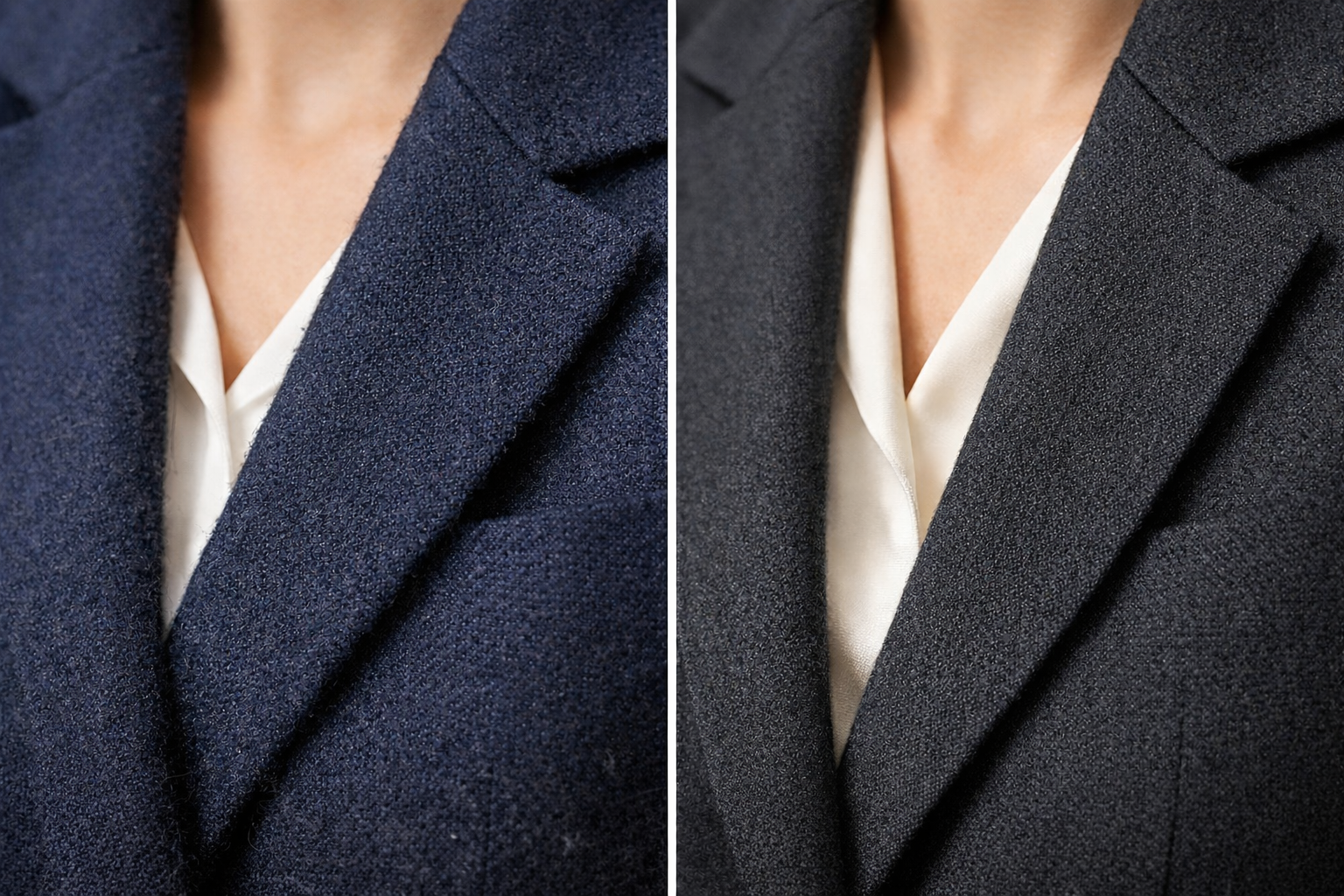
What quality fabrication looks like in practice (above, right)
- Premium raw materials with inherent strength
- Controlled fabrication that creates even tension and structural stability
- Restrained finishing that refines the fabric without masking it
Surface shine is often added to compensate for weaker materials, particularly in wool blends and viscose-heavy tailoring. The finish creates a smoother hand feel and a more polished appearance initially, but the effect fades unevenly with wear.
Natural luster, by contrast, comes from the fiber itself. Silk, high-twist wool, dense flannel, and metallic yarns reflect light without artificial coating or surface treatment. Their depth remains consistent rather than wearing away over time.
Investment Examples
The Row Fontana Virgin Wool Blazer – densely woven virgin wool with high-quality fiber and precise weave execution
Loro Piana Parksville Crewneck in Baby Cashmere – a fine-gauge knit from one of the strongest raw fiber sourcing houses in luxury fashion
Lens 2: Fabric Density
Fabric density refers to how tightly the material is woven or knitted.
Two garments can use the same fiber and still perform very differently. Higher-density fabrics maintain shape, resist collapse, and recover more cleanly after wear and cleaning. Lower-density fabrics lose structure faster even when the fiber itself is technically good.
Density matters most in garments expected to carry visual presence, including trousers, jackets, and coats.
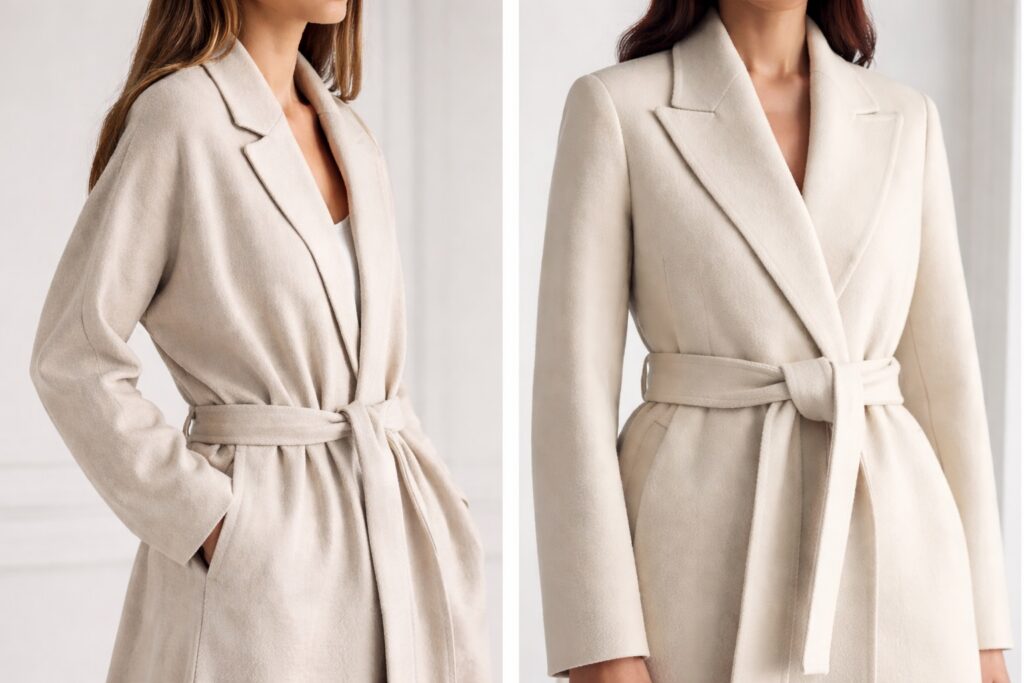
What quality fabric density looks like in practice (above, right)
- Opacity when held to light
- Weight that feels substantial rather than fragile
- Shape retention after handling
Investment Examples
Max Mara ‘Manuela’ Icon Coat – substantial wool cloth that creates structure and presence through weight and density
Loro Piana Maria SB Brushed Alpaca Coat – where dense fabric supports the silhouette independently of cut
Loro Piana Rodger Pants – where shape retention comes from the fabric itself rather than pressing alone
Why Both Lenses Matter
Fabrication without density can feel refined but insubstantial.
Density without quality fabrication can feel heavy but coarse.
True investment pieces satisfy both standards. That balance allows a garment to maintain shape, clarity, and composure with repeated wear.
Quality Standard: Construction
Construction determines whether a garment maintains its form naturally or depends on temporary stiffness that deteriorates with use.
In women’s ready-to-wear, this distinction is rarely explained clearly. Technical terms are often absent from product descriptions or impossible to verify. Rather than focusing on theoretical construction methods alone, Credence evaluates how garments behave under real conditions: movement, sitting, repetition, and recovery.
Well-constructed garments retain a stable and consistent appearance through use.
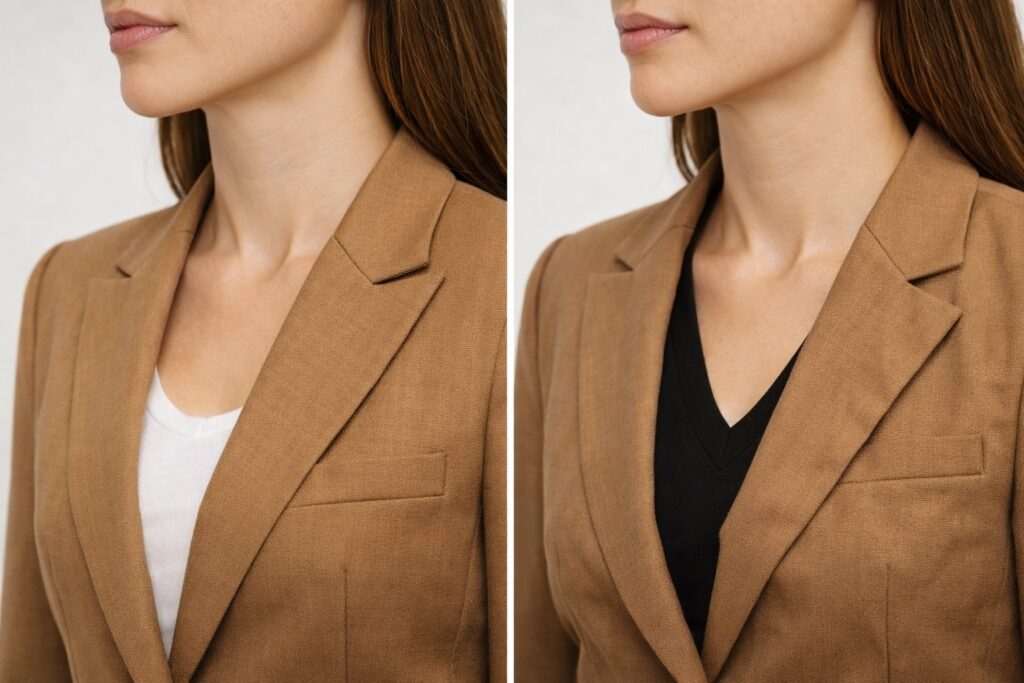
What great construction looks like in practice (above, left)
- Neckline lies flat without pulling or gaping
- Lapel stays smooth without collapsing or looking too rigid
- Front panels remain smooth rather than rippling or twisting
How to shop for it
Move in the garment. Sit, stand, and reach.
The fabric should remain smooth at the seams without pulling, twisting, or rippling as your position changes.
Check areas exposed to repeated strain. Buttons, closures, and seams should feel secure and remain flat while moving.
Investment Examples
Aläia Wool Crepe Cinched Blazer – maintains neckline stability and smooth front panels through repeated wear
Kiton Single-Breasted Jacket in Stretch Virgin Wool – retains shoulder structure and chest definition across years of wear
Gabriela Hearst Leiva Blazer in Sportswear Wool – recovers its shape after movement rather than setting deep creases
Quality Standard: Lining Integrity
Most people notice lining only when it is decorative, but its primary role is functional.
High-quality linings improve comfort, regulate temperature, and reduce friction against the outer fabric. They help garments move cleanly and reduce internal strain that eventually shows on the exterior.
Synthetic linings often trap heat, create static, and deteriorate faster than the garment itself. Natural and cellulose-based linings tend to age more gracefully and support long-term wear.
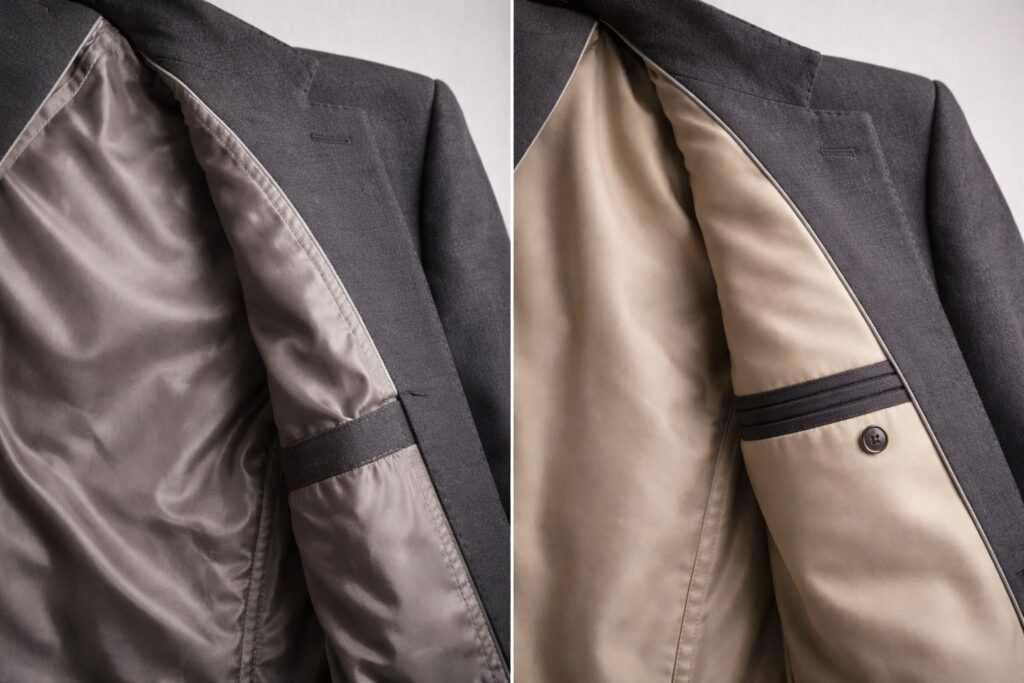
What high-quality lining looks like in practice (above, right)
- Cupro, silk, silk-blend, lyocell, viscose, modal, or rayon linings
- A cool, fluid feel rather than a synthetic slickness
- Interior fabric that moves smoothly with the outer shell
How to shop for it
Lift your arms. Cross them. Sit down.
The garment should move smoothly without catching at the shoulders or tightening across the back.
If the lining resists movement, the garment is under internal tension. Over time, that strain often appears at the seams, shoulders, or back panels.
Investment Examples
The tailored jackets referenced earlier follow this same principle. Their interiors move with the garment rather than resisting it, which contributes to their longevity.
The same standard appears in other categories as well:
Chloé Boyish Tailored Pants in Wool Grain de Poudre – combines breathable lining with smooth movement through the hips and seat
The Row Malva Wool Skirt – has an interior finish that preserves drape and reduces cling
Dolce & Gabbana Wool Calf-Length Sheath Dress – uses a silk-blend lining that reduces strain at the waist and back
Quality Standard: Seam Finishing
Seam finishing is where quality stops being obvious and starts being proven.
Clean interior finishing reduces bulk, prevents fraying, and improves durability at stress points. It reflects consistency in construction rather than shortcuts hidden inside the garment.
Poor seam finishing rarely fails all at once. Weakness develops gradually, beginning at areas of strain before spreading outward.
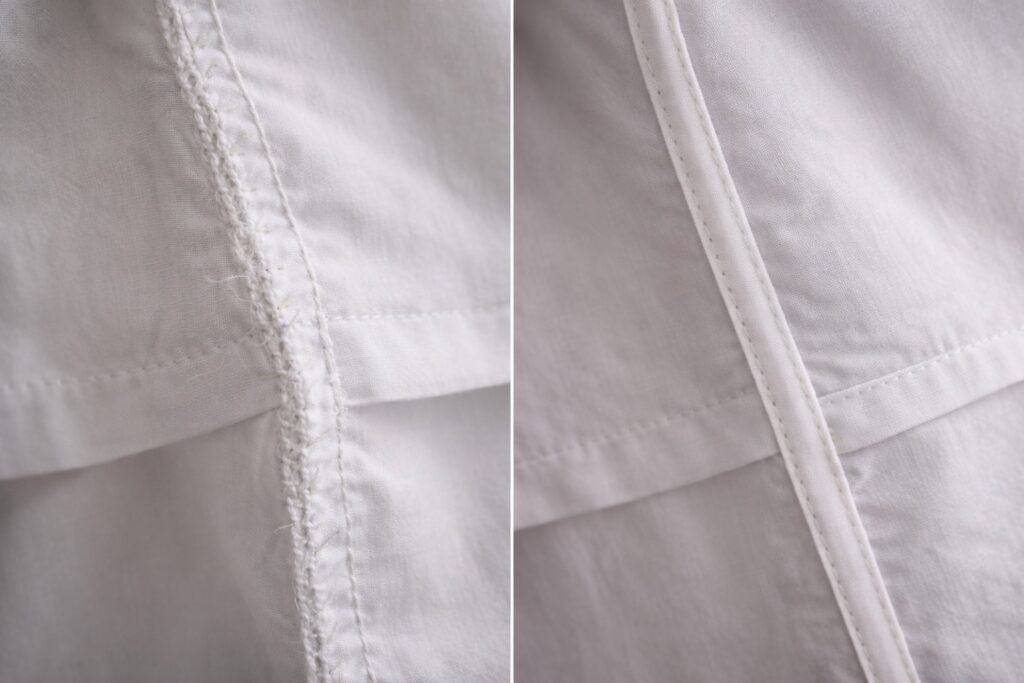
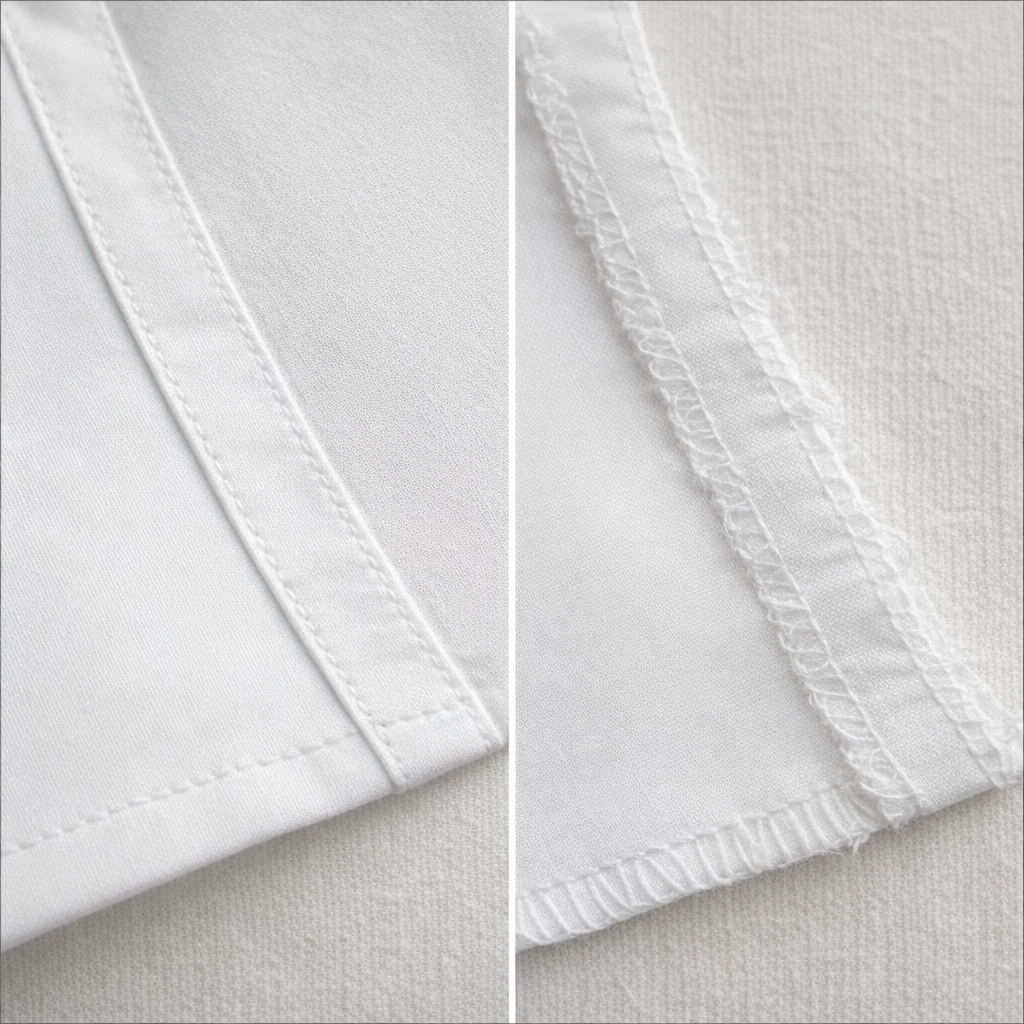
What great quality seam finishing looks like (above, right)
- Bound, taped, or enclosed seams
- Consistent stitching at stress points
- Interior construction that reflects the same care as the exterior
How to shop for it
Turn the garment inside out.
Look for enclosed or bound edges rather than raw edges or basic serging alone. Check stitching density at armholes, waist seams, and pocket corners.
If the inside looks rushed, the outside will not age well.
Investment Examples
Dolce & Gabbana Stretch Poplin Button-Down Shirt – has clean seam construction designed to withstand repeated washing
Loro Piana Katerina Top – has stable interior stitching that prevents twisting and distortion from repeated friction
Quality Standard: Pattern Alignment
Pattern alignment doesn’t just look better. It reflects technical precision as well.
When stripes, plaids, or motifs align correctly across seams, it indicates careful cutting and layout planning. Achieving that alignment requires additional fabric and more deliberate production.
Misalignment often signals cost reduction or rushed manufacturing, even when the fabric itself is good.
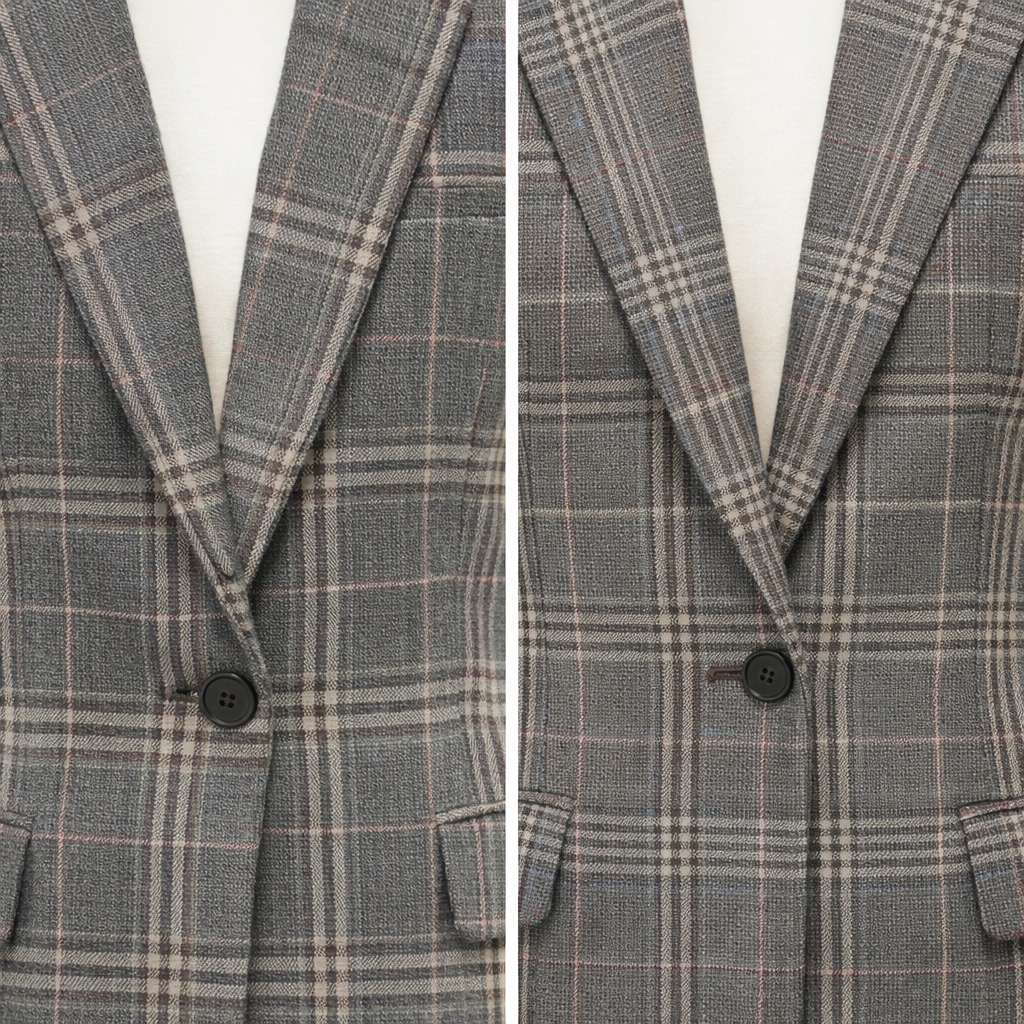
What great pattern matching looks like in practice (above, right)
- Continuous patterns across pockets and seams
- Alignment maintained at shoulder and side seams
- A visually calm result rather than dissonance
How to shop for it
Examine pockets, lapels, plackets, and side seams.
Stripes should meet cleanly. Plaids should continue uninterrupted. If your eye catches disruption, fabric was likely conserved during cutting.
Investment Examples
Dries Van Noten Woven Blazer – carries intricate plaid alignment cleanly through the lapel, pockets, and closures
Ralph Lauren Collection Striped Cotton Shirt – vertical stripes continue cleanly across the placket and shoulder
Brunello Cucinelli Prince of Wales Trousers – balanced check pattern placement that allows the garment to read as one continuous cloth
Each of these quality standards addresses a different failure point, but they also work together.
Many garments succeed in one area while failing in another. True investment pieces meet all five standards simultaneously. This is what allows them to wear well, maintain relevance, and continue functioning across years of use.
Why this matters more than trends
Trends change quickly. Construction does not.
When you understand these five elements, you stop choosing garments that impress briefly and start choosing pieces that continue to perform.
Wardrobes become smaller and more useful through discernment rather than restriction.
Fewer pieces. Clearer roles. Longer wear.