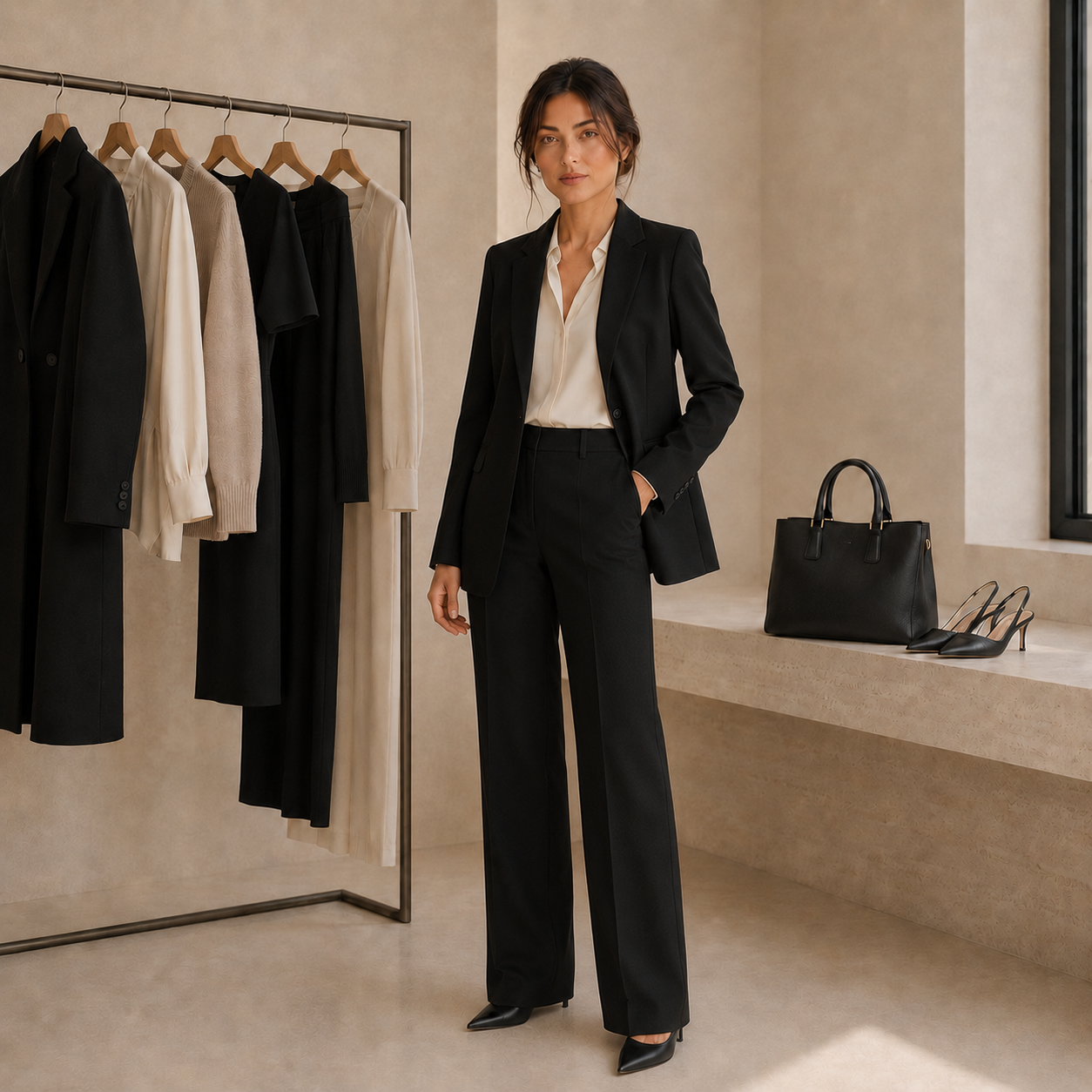
A professional wardrobe does not need thirty similar pieces. It needs the right ten. Before the pieces themselves, it helps to see why a full closet so often still falls short, because that is exactly what a set of professional wardrobe essentials is meant to solve.
A wardrobe becomes crowded when too many pieces have narrow use. A blouse that only works under one blazer, a trouser that only works with one heel height, a dress that looks right for one kind of event, a bag that works for errands but not the office are all common problems.
These pieces may seem practical when you buy them, but each one asks for too many special circumstances.
That is why a full wardrobe can still feel limited.
The strongest pieces remove a lot of that effort. It is possible to have a trouser that works with flats, slingbacks, and low heels. There are also blazers that sharpen a blouse, sit cleanly over a knit, and still work with denim on a less formal day. The same with a sweater that fits under tailoring, stands on its own, and replaces several weaker tops.
Purchasing the strong pieces is easier when you know which details make a piece useful in more outfits before you buy it: the fabric, cut, color, proportion, and level of detail.
Getting dressed can be a lot easier. It requires pieces that can cover more real life: workdays, meetings, travel, dinners, and appointments.
What Allows One Piece to Replace Three
What makes strong, versatile pieces the workhorses they are is in the fabric, cut, color, proportion, and level of detail. Each item in the Examples Worth Considering sections in the list below has been chosen because it meets the Credence Standard. Here is how Credence evaluated these items and how you can too:
Start with color. The most useful colors are usually black, charcoal, ivory, cream, oatmeal, stone, taupe, camel, deep brown, and navy if navy fits your wardrobe. These colors are valuable because they work with your shoes, bags, coats, blazers, and trousers without forcing a new purchase around them.
Fabric matters next. A useful piece needs enough fabric weight to avoid excessive wrinkling, clinging, or loss of shape. Thin fabric may look clean on a hanger, but it often shows every line underneath, loses shape during the day, or starts to look tired after a few wears. If you don’t look polished your confidence will be impacted and you will be distracted by your clothes more than necessary.
The cut has to work in more than one part of your life. A piece should look polished enough for work without feeling too stiff for everything outside of work. It should have enough structure to hold its shape and enough ease to move, sit, layer, and wear again.
Proportion is what allows strong pieces to work together. Length, rise, shoulder, sleeve, hem, and volume all decide how often a piece can be worn. You do not want a blazer that is too cropped so that it may only work with one trouser or a sweater sleeve that is too tight to fit over a blouse. The right proportions prevent those problems before they start.
Details should stay quiet. Heavy hardware, contrast stitching, novelty buttons, exaggerated sleeves, strong prints, and unusual hems all make a piece easier to remember and harder to wear on repeat. The more attention the detail asks for, the fewer outfits the piece can support.
The pieces that replace several others are rarely the loudest pieces in the wardrobe. They are the ones that work cleanly with what is already there.
The Professional Wardrobe Essentials That Replace Thirty
Here is the list. Each one has a clear job. Each one will work with more than one outfit, setting, and shoe.
1. A black or charcoal tailored coat
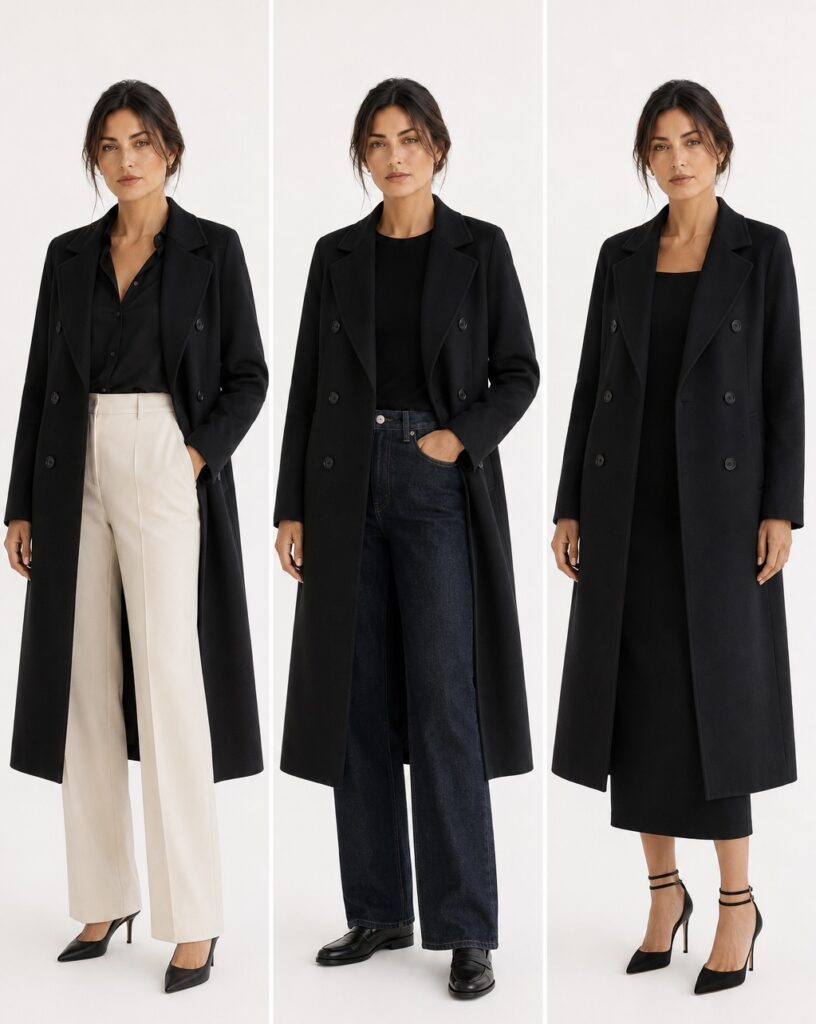
A black or charcoal tailored coat makes an outfit look finished.
Here are all the other coats it can replace:
-the casual coat that weakens work outfits
-the dress coat kept for rare events
-the trend coat that stopped working after one season
-the coat that only looks right over trousers
Look for wool or a majority wool blend, a clean shoulder, and a straight or gently shaped body. The coat should be long enough to cover professional outfits without cutting them in the wrong place. The buttons should be quiet. The hardware should not draw attention.
Avoid cropped lengths, flimsy fabric, oversized volume, and shapes so relaxed that they make polished clothes look accidental.
More details on choosing the right coats for your wardrobe are discussed here.
Examples Worth Considering
Max Mara Long Wool Coat with Half Belt Detail – the most tailored option. The double-breasted front, straight fit, wide lapel, and back half-belt give it more structure than a robe coat, while the long line makes work outfits, dresses, and evening clothes feel finished.
Toteme Classic Doublé Wool Coat – the more minimal coat. The single-breasted front, unlined doublé construction, and natural drape make it less formal than the Max Mara options, but still polished enough to work across professional outfits.
Max Mara Manuela Icon Coat – the softest and most iconic option. The belted wrap shape and pure camel hair give it a more fluid, luxurious feel than a sharply tailored coat. It is the easiest choice for someone who wants polish without a hard, structured silhouette.
2. A slightly elongated dark blazer
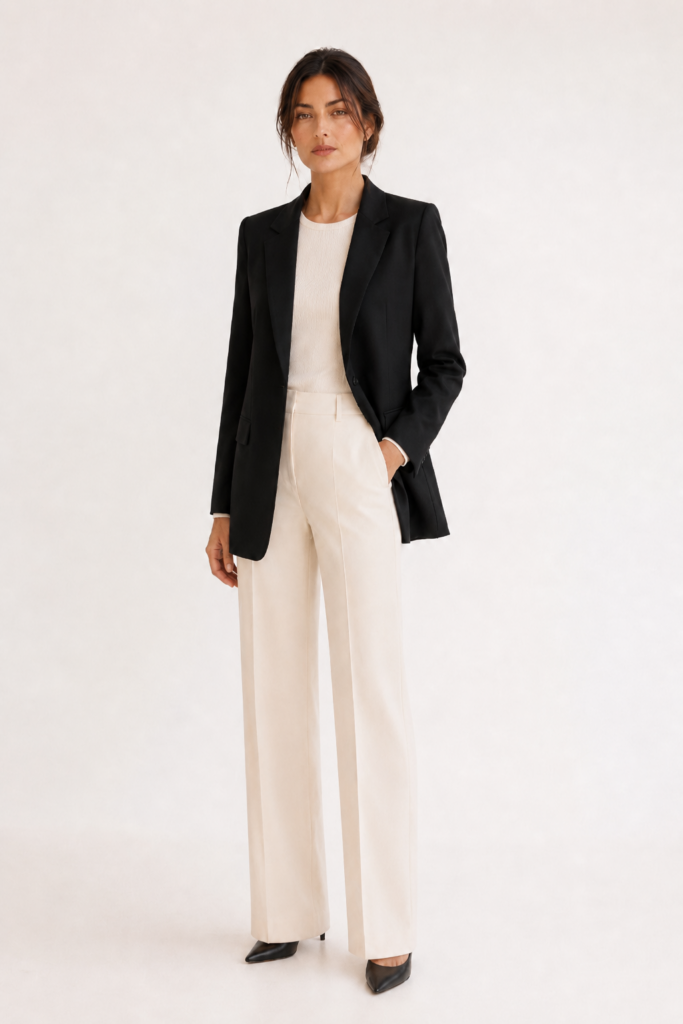
A slightly elongated dark blazer is the main structure piece in a professional wardrobe.
It can replace the stiff office blazer, the trend blazer, the lightweight jacket that never looks polished enough, and the dressier jacket kept for rare evening plans.
The strongest versions are black, charcoal, deep navy, or dark brown depending on the color scheme of your wardrobe. Look for wool or a strong wool blend, a natural shoulder, and a length that sits around the low hip. The body needs enough room to sit over blouses and fine knits without pulling. The sleeves should stay clean over layers.
Avoid cropped length, a pinched waist, shiny fabric, and exaggerated shoulders.
A good blazer sharpens a blouse, sits cleanly over a knit, and makes trousers, denim, or a dress look more finished.
For more on choosing the right blazers for a wardrobe read the guide here.
Examples Worth Considering
Gabriela Hearst Leiva Blazer in Sportswear Wool – a sharp single-breasted blazer. The strong shoulder, clean lapel, slim fit, and pick-stitch detail make it polished without looking corporate. It is the most direct choice for one black blazer that structures trousers, dresses, and refined knits.
Gabriela Hearst Angela Double-Breasted Wool-Crepe Blazer – a stronger tailoring statement. The double-breasted front, peak lapel, and shaped waist give it more presence than a simple single-breasted blazer. It works best for someone who wants the blazer to define the outfit rather than quietly finish it.
The Row Misia Jacket – the quietest luxury option. The single-breasted shape, soft virgin wool, slightly fitted silhouette, and minimal button closure make it refined without looking overdesigned. It is the cleanest choice for someone who wants the blazer to disappear into the wardrobe and work repeatedly.
JOSEPH Tailoring Wool Stretch Jackie Jacket – a more attainable, still beautiful, version. The single-breasted cut, regular fit, wool-stretch fabric, lining, shoulder padding, and flap pockets give it the refined structure needed for work without the price level of the luxury options.
3. Full-length black trousers
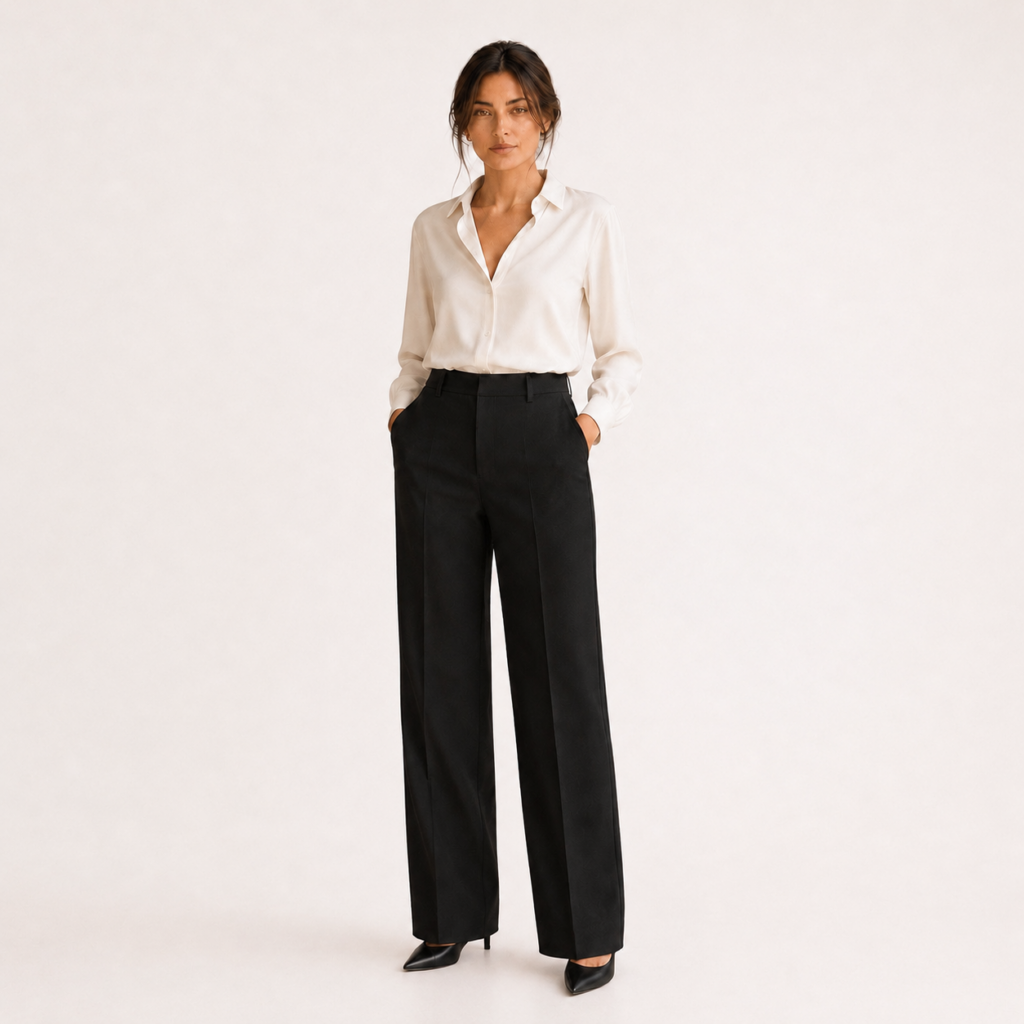
Full-length black trousers create more outfits with less effort than almost anything else in a professional wardrobe.
They can replace cropped black pants, ponte work pants, trend trousers, almost-right office pants, and trousers that only work with one shoe.
Look for a clean waistband, enough ease through the hip and thigh, and fabric with enough weight to avoid clinging. The leg can be straight, slim-straight, or a controlled wide leg. The line should stay clean.
The hem matters. Depending on the width, the trouser should either fall in a clean long line or have a slight front break. The back hem should sit above the floor. There should be no pooling.
The right black trouser is useful because it makes blouses, knits, blazers, coats, and shoes easier to wear.
Examples Worth Considering
Theory Stretch Wool Straight Full-Length Trousers – the cleanest everyday black trouser. The high-rise, straight-leg cut, full-length inseam, and stretch wool fabric make it the most direct replacement for weaker office pants, ponte pants, and cropped trousers.
Chloé Boyish Tailored Pants in Wool Grain de Poudre – a more elevated tailored trouser. The straight leg, pressed creases, 100% wool grain de poudre, and regular waist give it a sharper menswear-inspired feel, while the subtle D-ring detail makes it more distinctive than a plain black trouser.
M.M.LaFleur Rina Sculptural Pant – a polished, wide-leg trouser with a flattering long architectural line. The high rise, pressed front seams, wide-leg shape, and extra hem allowance make it especially useful for someone who wants length, polish, and easier care rather than a traditional wool trouser.
4. A lighter neutral trouser
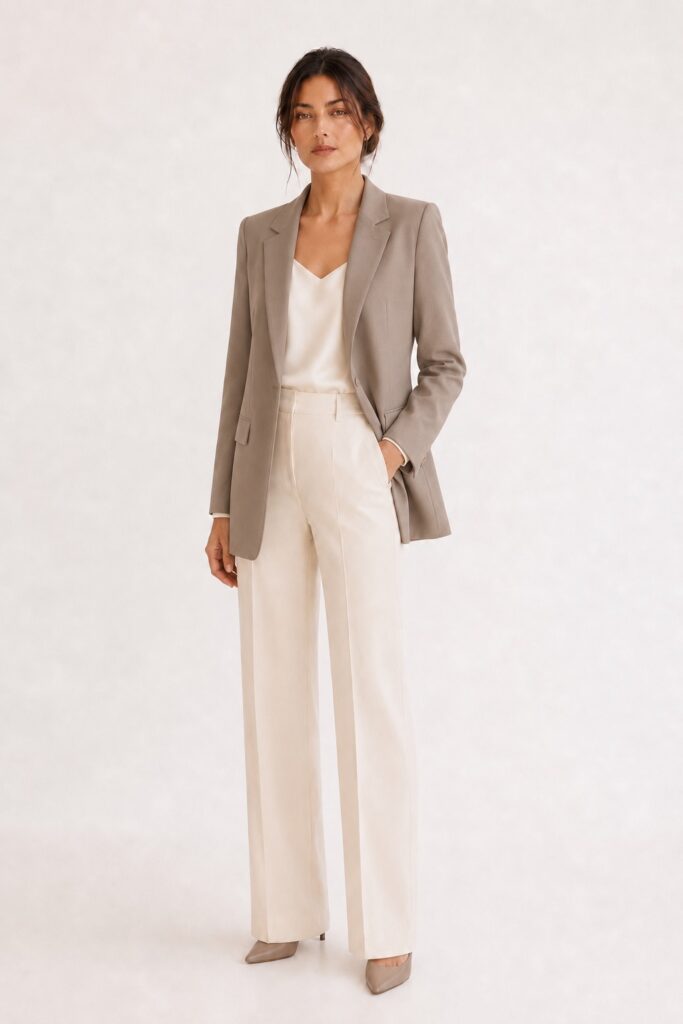
A lighter neutral trouser keeps a professional wardrobe from becoming too black-heavy.
It can replace seasonal white trousers, casual beige pants, lightweight summer pants, and trend-colored trousers that are hard to pair.
The best colors are usually stone, taupe, oatmeal, soft beige, warm grey, or ivory. The fabric needs enough substance for the color. Light trousers should not show pockets, seams, or undergarments. They may need lining, a denser weave, or a heavier cloth than a darker trouser.
Full length usually gives the most polish. A clean ankle length can work if it suits the shoes in the wardrobe.
Avoid thin linen unless the trouser is meant to be casual.
A lighter trouser should feel as intentional as a black trouser, not like a seasonal substitute.
Examples Worth Considering
Max Mara Wool-Blend Trousers in Ivory – a polished light trouser. The wool-blend gabardine, wide leg, high-cut waistband, trouser crease, and tailored long cut make it the strongest option for replacing weaker white or beige trousers that look too casual, thin, or seasonal.
Gabriela Hearst Norman Wide-Leg Pant in Ivory Recycled Virgin Wool – the most elevated version. The wide leg, defined waist, Italian construction, and recycled virgin wool make it the luxury tailoring option in this category.
JOSEPH Bi-Stretch Toile Tafira Trousers – a structured non-wool option. The heavyweight cotton blend, supportive stretch, full length, and clean tailored look make it the more modern light trouser.
5. An ivory blouse or refined shirt
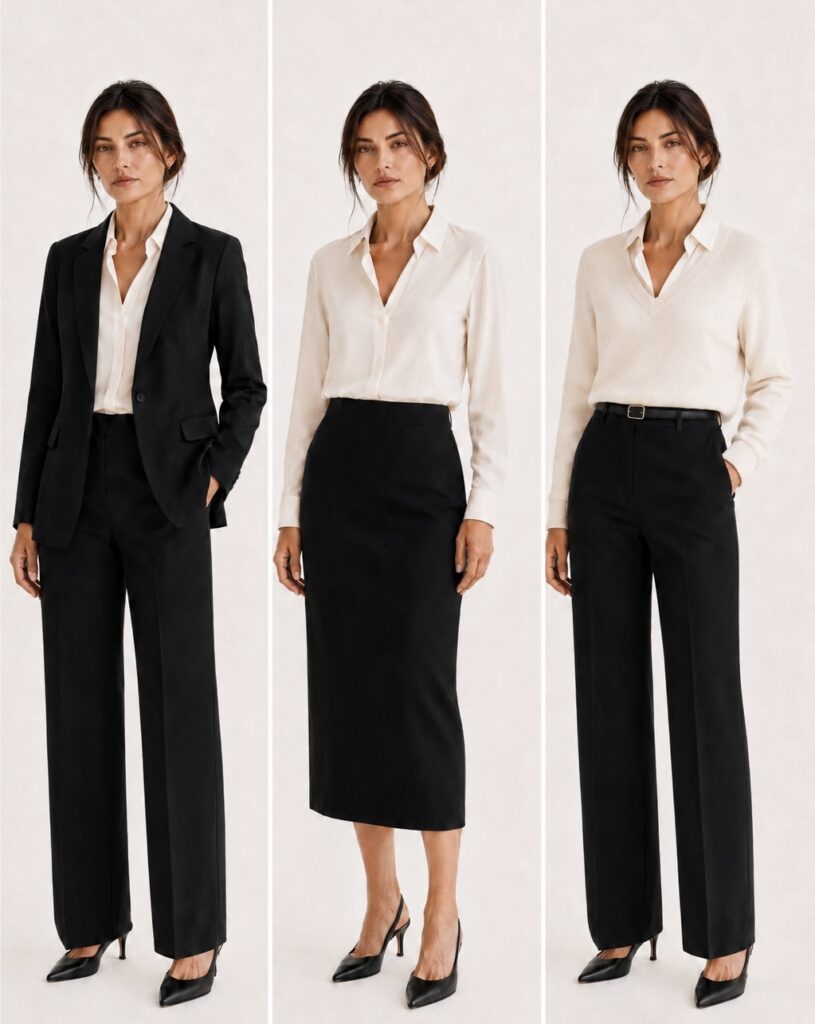
An ivory blouse or refined shirt works under tailoring, with trousers, with skirts, and on its own.
It can replace fussy work tops, fragile silk tops, trend blouses, casual T-shirts worn because nothing else works, and occasion tops that never become useful.
Look for ivory, cream, soft white, or pale stone. The fabric should be opaque enough for work, fluid enough to move, and substantial enough to avoid looking limp. The neckline should be clean. The shoulder and sleeve should sit well under blazers without bunching or pulling.
Avoid large bows, excessive ruffles, sheer fabric, dramatic cuffs, and details that make the blouse feel like an event piece.
The blouse should give the wardrobe a clean, repeatable top that works with the strongest pieces around it.
Examples Worth Considering
Ann Mashburn Classic Blouse in Ivory Silk Crepe de Chine – the easiest shirt to layer. The scaled-down point collar, pure shirt shape, and weighty 40 momme, 4-ply silk crepe de chine make it substantial enough to wear alone but smooth enough to sit under a blazer or a V-neck sweater without bunching.
Nili Lotan Gaia Silk Shirt in Ivory – a clean, slim silk shirt. The classic collar, button front, straight slim body, back yoke, classic placket, and 100% silk make it the most shirt-like option here, which helps it work tucked into trousers, under tailoring, and under a sweater.
L’Agence Dani Silk Blouse in Ivory – a slightly softer option that still layers cleanly. The Dani is a classic silk button-down in ivory charmeuse with a shorter curved hem, three-quarter sleeves, relaxed open collar, and 100% silk. The shorter sleeve is useful under a V-neck sweater because there is less cuff bulk to fight with the knit sleeve.
6. A fine-gauge crewneck knit
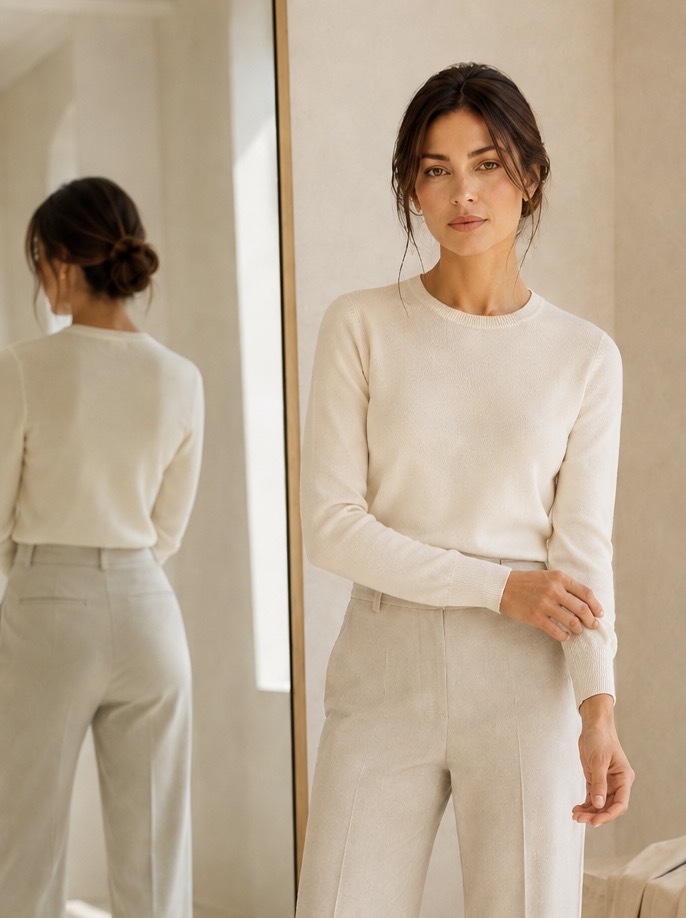
A fine-gauge crewneck knit gives tailoring more use and replaces several weaker tops.
It can replace bulky sweaters, casual knits that do not fit under blazers, T-shirts that feel too casual, seasonal knits, and novelty sweaters.
Look for fine-gauge cashmere, merino, silk-cashmere, or a strong cotton blend. The surface should be smooth. The fabric should have enough weight to avoid clinging, but not so much bulk that it fights with a blazer or coat.
The neckline should sit cleanly under tailoring. The body length should work tucked, half-tucked, or worn out.
Avoid chunky ribbing, cropped bodies, balloon sleeves, fuzzy texture, and shapes that only work alone.
A good crewneck knit works under a blazer, with a coat, with trousers, with denim, and on its own.
Read the knitwear guide for the other sweater types worth owning.
Examples Worth Considering
John Smedley Dillie Extra Fine Merino Wool Crew – the cleanest, most layerable knit. The extra fine merino, round neckline, ribbed trims, and softly structured fit make it the most practical choice under a blazer because it gives polish without cashmere bulk. It is the crispest option of the three.
Falconeri Ultrafine Cashmere Crewneck – softness without losing the fine-gauge line. The ultrafine cashmere, crewneck shape, ribbed neckline, cuffs, and hem make it easy to wear under tailoring, but softer and more relaxed than the John Smedley. It is the best choice for someone who wants the knit to feel luxurious but still light.
Fabiana Filippi Cashmere and Silk Sweater – the most elevated, quiet-luxury version. The fine lightweight cashmere gauze and Italian production give it a more refined, delicate look than the other two. It is the most elegant choice, but more polished luxury than hard-working everyday knitwear.
7. A refined turtleneck or mock neck
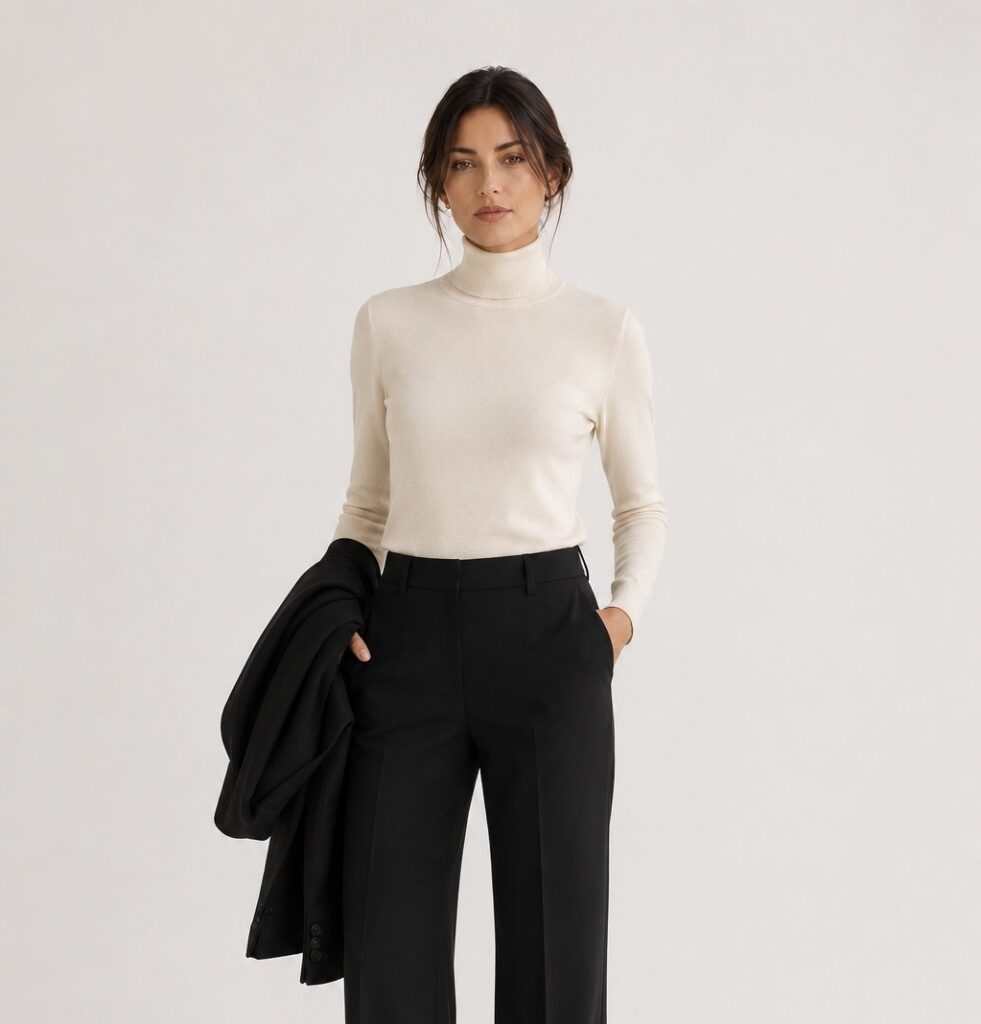
A refined turtleneck or mock neck makes cold-weather, travel, and air-conditioned-office outfits easier.
It can replace scarves used to fill an outfit, casual long-sleeve tops, thin layering tops, seasonal sweaters, and blouses that do not sit well under jackets.
Look for fine-gauge merino or cashmere. The neck should sit cleanly without collapsing. The body should be slim enough to layer, but not tight enough to cling. The sleeves should fit under blazers and coats without adding bulk.
Black, ivory, oatmeal, charcoal, and deep brown are usually the most useful colors.
A refined turtleneck should make trousers, coats, and blazers easier to wear. It should not look like a base layer.
Examples Worth Considering
John Smedley Aofie Roll Neck Jumper – the cleanest merino layer under tailoring. The fine merino knit, neat roll neck, and slim layerable shape make it a strong choice for blazers and coats when a shirt collar would add too much bulk.
Theory Turtleneck Sweater in Regal Wool – the simplest professional turtleneck. The fine wool knit, clean neckline, and core wardrobe colors make it easy to wear with black trousers, dark blazers, and tailored coats without making the outfit feel heavy.
Loro Piana Neo Piuma Turtleneck – the lightest luxury version. The fine cashmere gives the polish of a high neckline while keeping the silhouette soft, smooth, and easy to layer. It is the most elevated option, but also the one to choose for refinement rather than hard-wearing structure.
8. A clean professional dress
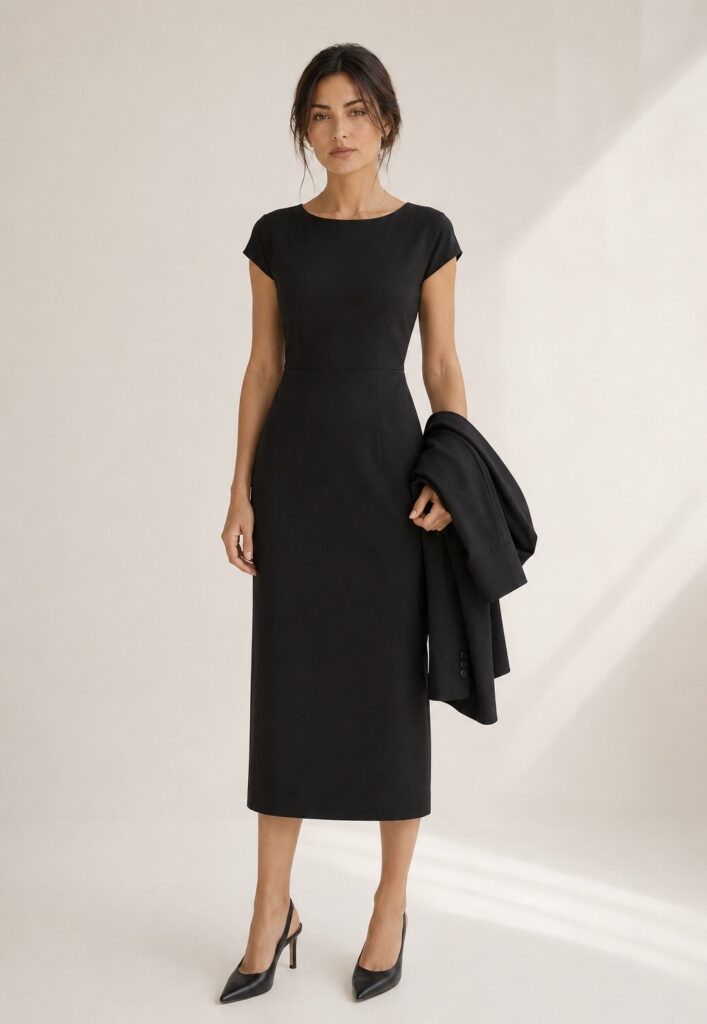
A clean professional dress solves the days when separates create too many decisions.
It can replace event-only dresses, dated office dresses, skirt-and-top combinations that never quite work, travel outfits that require several pieces, and backup outfits kept for meetings.
The strongest version is usually a simple sheath, column, or softly tailored midi. Look for substantial knit, wool crepe, compact viscose, or another fabric that can hold its shape. The neckline should work under a coat or blazer. The body should have enough ease to sit, move, and wear through a full day.
Avoid thin jersey, tight bodycon cuts, loud prints, and trend details that make the dress too recognizable.
A professional dress is easy to repeat because the shape is clean and the fabric stays polished.
Examples Worth Considering
The Row Angeline Dress – the quietest black professional dress. The double stretch wool, rounded neckline, midi length, and clean 3/4 sleeves make it polished enough to wear alone and simple enough to layer under a blazer or coat.
Gabriela Hearst Seymore Knit Midi Dress in Merino Wool Cashmere – a softer knit dress that still feels refined. The merino-cashmere blend, crew neckline, elbow sleeves, A-line shape, and full midi skirt make it easier to wear through long days than a strict sheath, while still staying polished.
Brunello Cucinelli Draped Virgin Wool Midi Dress – the most elegant draped option. The virgin wool, asymmetric cowl neckline, bias-cut silhouette, and Italian make give it movement and polish without relying on print, shine, or trend detail.
Victoria Beckham Bela Midi Dress in Gray or Acai – a structured dress with more visible shaping. In the gray or acai wool-led versions, the round front neckline, V-shaped back, front waist gather, and midi length give it more shape than a plain column while keeping the fabric substantial enough for a professional wardrobe.
9. A refined black shoe
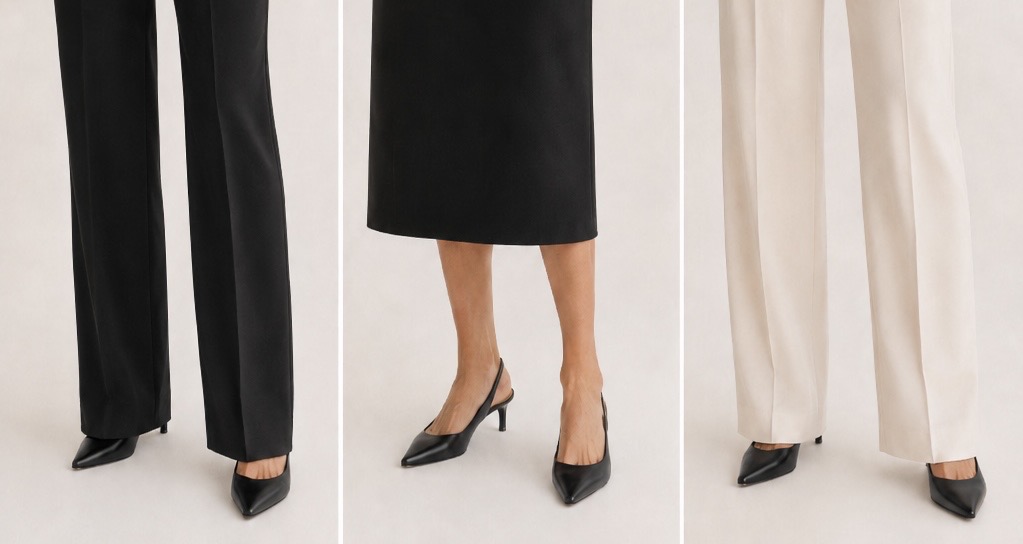
A refined black shoe makes professional outfits wearable more often.
It can replace uncomfortable heels, casual flats, office-only pumps, trend shoes, and shoes that require one specific hem length.
The right version depends on the wardrobe. It may be a refined loafer, low slingback, clean pump, polished flat, or low-heeled ankle boot. There are more details on bringing these into your wardrobe in the shoe guide.
The standards stay the same. The leather or suede should look refined. The toe shape should be clean. The heel height should be stable enough to wear often. The shoe should work with trousers and dresses.
Avoid heavy soles, loud hardware, extreme toe shapes, and trend-driven heels unless they already fit the rest of the wardrobe.
The best black shoe lets the strongest clothes be worn more often.
Examples Worth Considering
Gianvito Rossi Robbie 55 Slingback Pumps – the sharpest professional slingback. The pointed toe, 55mm heel, and refined slingback shape give it the cleanest line under full-length trousers while still working with dresses and skirts.
Manolo Blahnik Carolyne 50 Slingback Pumps – a softer classic. The almond toe, 50mm low heel, and elasticated slingback make it less sharp than the Gianvito Rossi, but easier to wear if she wants polish without a severe pointed toe.
Toteme Patent Loafer Pumps – a more grounded alternative to a slingback. The loafer-pump shape, patent leather, and kitten heel make it polished but less delicate, especially with trousers, denim, and less formal work outfits.
10. A structured leather work bag

A structured leather work bag keeps the wardrobe looking professional when the outfit is simple.
It can replace the laptop tote, the casual handbag, and the travel personal item.
The best colors are usually black, dark brown, taupe, or another deep neutral. The shape should have structure. The hardware should be clean. The leather and construction should hold up to the demands of a work bag and still look polished for years.
The size should fit the real workday: phone, wallet, keys, sunglasses, documents, tablet, laptop, or whatever the day requires.
Avoid bags that are too small, too fragile, too logo-heavy, or too tied to one season.
A strong work bag does not need to be loud. It needs to make simple clothes look finished.
Examples Worth Considering
Valextra Milano Two Handles Medium Bag – best overall polished luxury work bag. A structured leather bag that still reads elegant rather than corporate. The Milano Medium is polished enough for meetings, but designed with real work capacity: room for a 15-inch laptop, interior zip pockets, an adjustable internal belt, and a detachable strap.
Frank Clegg Signature Lock Satchel – best craftsmanship/durability value work bag. It is structured, practical, repairable, and made with the kind of leather and hardware that can stay in use for years.
Métier Private Eye – best design/most elegant luxury work bag. It has a removable center compartment, adjustable shoulder strap, solid brass hardware, hand-stitching at pressure points, durable Alcantara lining, and accommodates a 13″ laptop.
How to Use The List Without Overbuying
This list is not a shopping assignment.
Do not buy all 10 pieces at once. Start with the weakest role in your wardrobe and correct that.
It may be the trouser you wear often but never feel good in. The blazer that only works with one outfit. The shoe that looks right but cannot be worn for a full day. The bag that is always too small, too casual, or too fragile.
Start there.
Ask:
Which piece do I reach for often but feel dissatisfied with?
What am I missing that I often need?
Which category creates the most outfit problems?
Which item do I keep replacing?
Which piece would make five existing outfits easier to wear?
Which item would reduce the need for backups?
Which piece would work across work, travel, and dinners?
The answer may be plain. A better black trouser. A stronger blazer. A smoother knit. A shoe with the right heel height. These are often the pieces that change the wardrobe most because they remove the problems that show up every week.
Buying well does not mean replacing everything. It means replacing the pieces that keep causing the same problem.
Build Around the Pieces That Do More Work
A professional wardrobe does not need endless variety to feel complete. It needs the right pieces doing enough work.
Prioritize the pieces that make everything around them easier to wear. A trouser that works with more shoes. A blazer that sharpens more outfits. A knit that fits under tailoring and stands on its own. A coat that finishes what is already there. A bag that works for the day you actually have.
These pieces reduce backup purchases because they handle the role properly. They do not create new problems with styling, proportion, fabric, or use.
That is what gives a wardrobe range: fewer weak pieces, stronger roles.
Read next: